
Last updated October 30, 2026
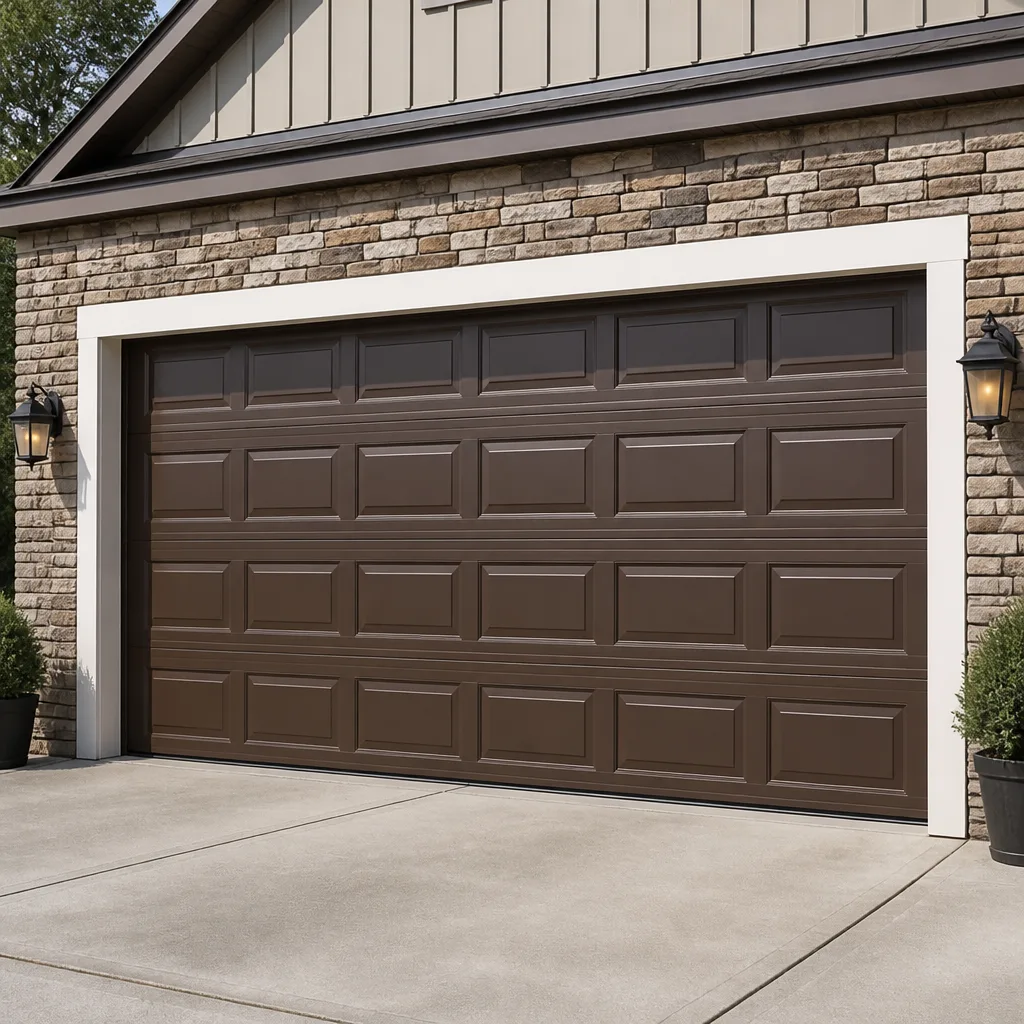 Raised-panel steel
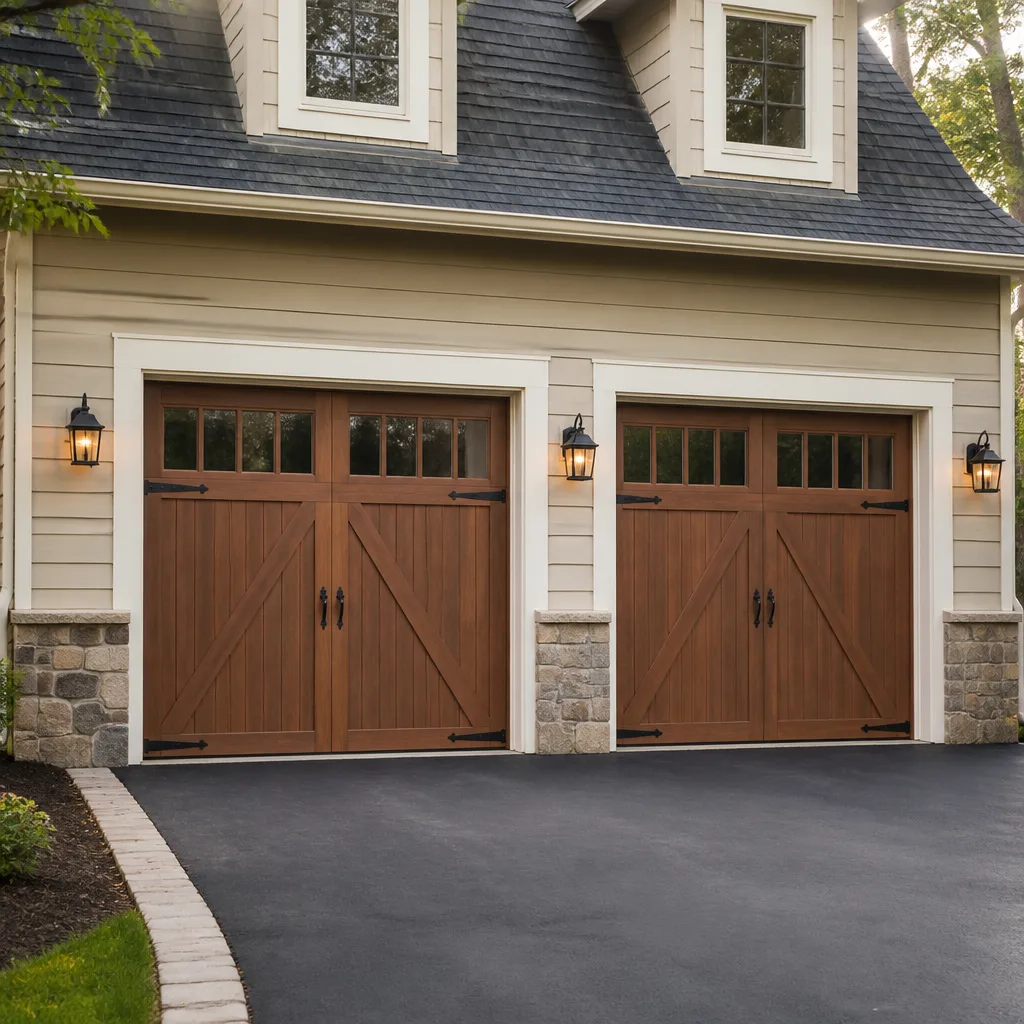 Carriage house
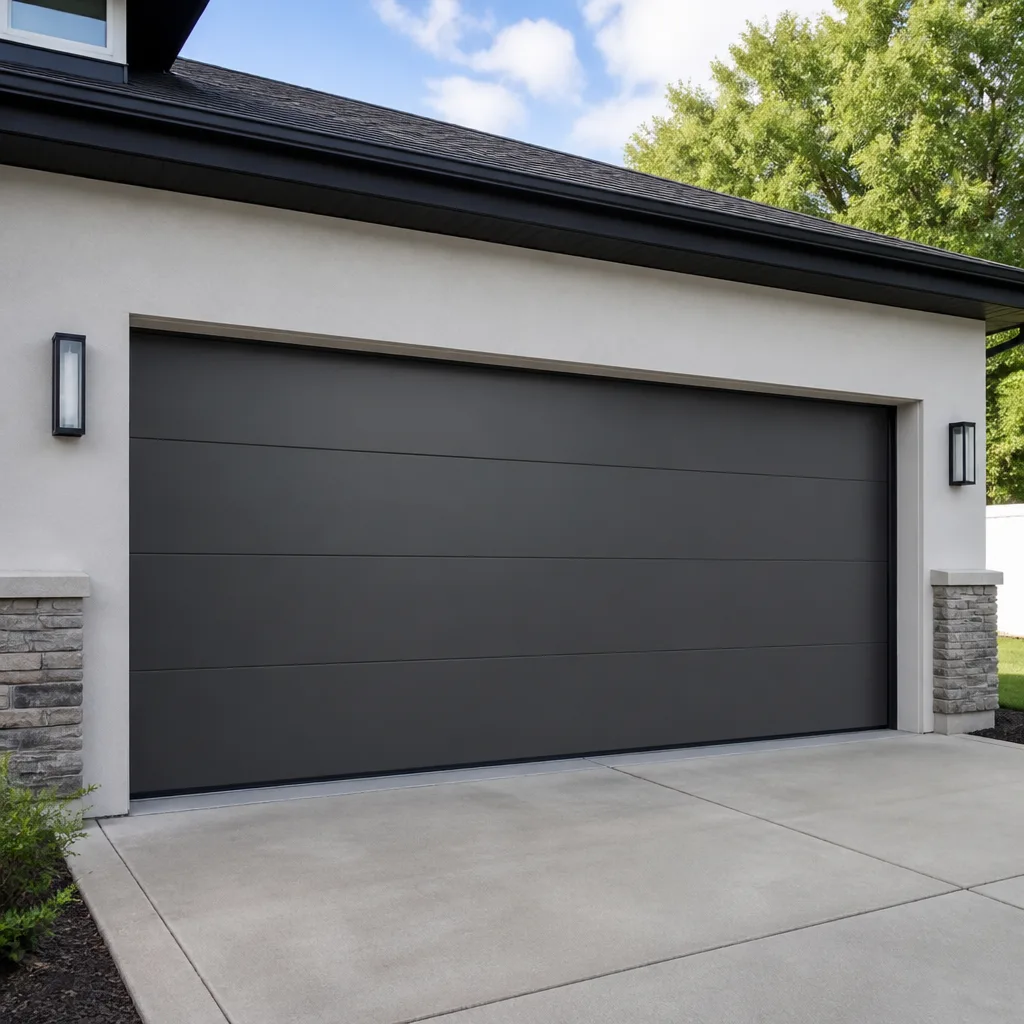 Modern flush
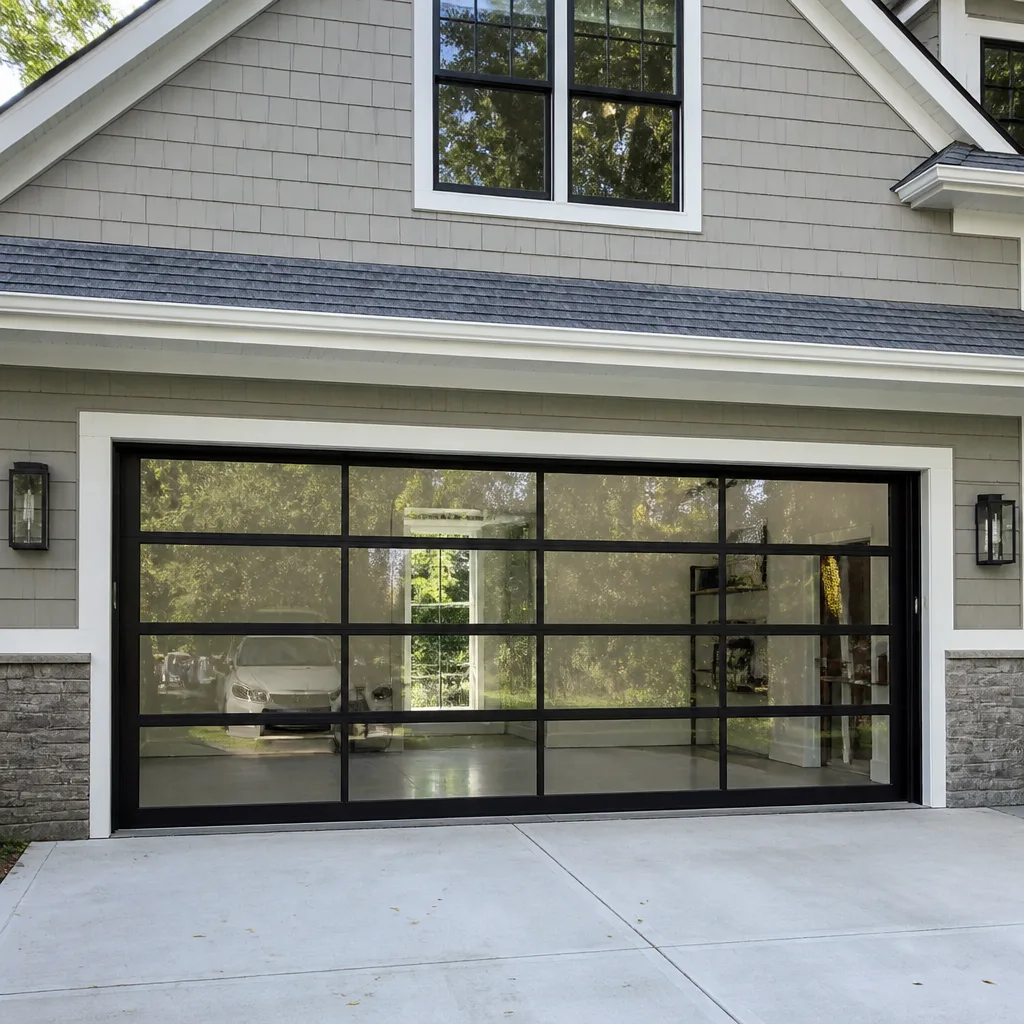 Full-view glass
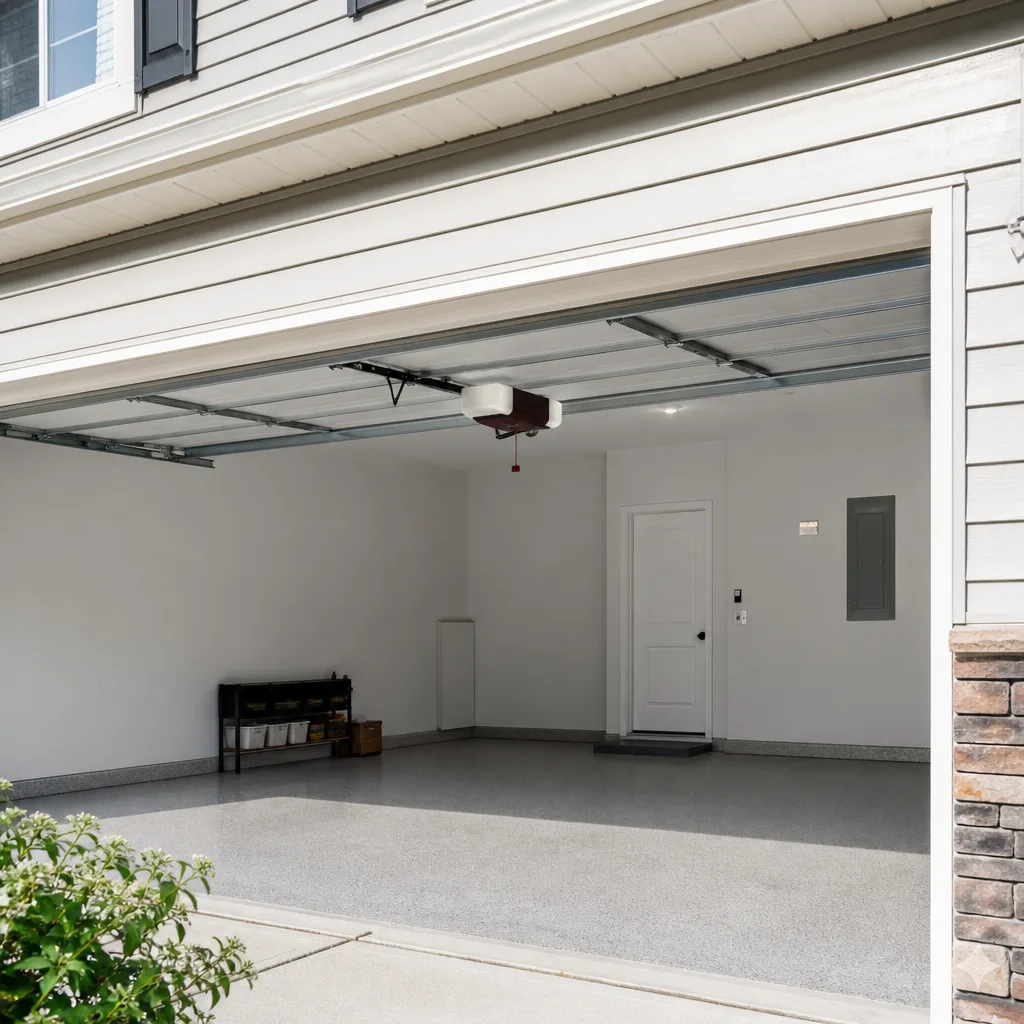 LiftMaster openers
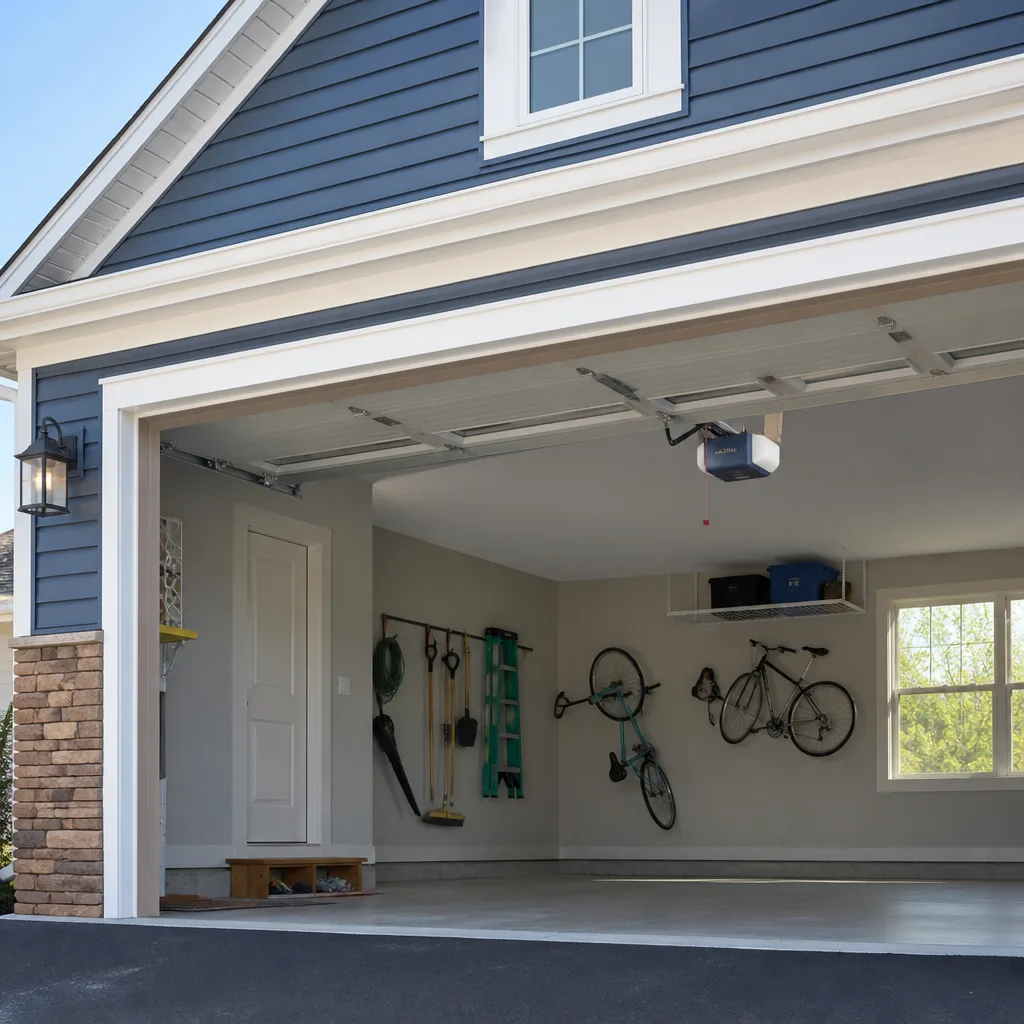 Chamberlain openers
Full 25-point door and opener safety check with every visit - springs, cables, rollers, tracks, and your LiftMaster or Chamberlain opener included
You get a price before we start. It does not change when the truck arrives.
Get your free estimateGarage Door Repair Maintenance Checklist for Riverside Homeowners
Here’s a number that surprises most Riverside homeowners: the majority of garage door breakdowns we respond to in October and November aren’t caused by neglect. They’re caused by a false sense of security. The door ran fine all summer. The opener responded. Nothing squeaked badly enough to notice. But Riverside’s heat doesn’t announce itself as it works. It quietly eats lubricant, expands concrete slabs under heavy doors, and bakes the temper out of torsion springs. Then the first cool snap hits, metal contracts a few thousandths of an inch, and a spring that was functionally fine at 105 degrees gives up at 55. This guide is built around that reality. It’s not a generic calendar of chores. It’s a cause-and-effect reference for the specific components that fail first in Riverside‘s climate, so you know not just what to check, but why that check matters here specifically.
Quick Answer
The most important garage door maintenance tasks for Riverside homeowners are: visually inspect torsion springs every 90 days (ideally starting in late September, not April), lubricate rollers and hinges every three to four months instead of the typical annual schedule because Riverside heat burns off grease faster, check and clean the bottom seal monthly for dust and grit buildup, test the opener’s auto-reverse feature every month, and verify track alignment after summer because concrete slab expansion gradually shifts door weight distribution. These five checks prevent roughly 80% of the breakdowns we see in Riverside homes.
Styles & brands we work with
Table of Contents
- Why Riverside Heat Kills Torsion Springs Before Cool Weather Does
- Lubrication Intervals Adjusted for Riverside: What to Use and When
- Bottom Seal and Weatherstripping: Fighting Dust, Not Just Rain
- Track Alignment Drift: The Concrete Slab Problem
- Opener Thermal Protection: Heat Stress or Mechanical Fault?
- The 10-Minute Monthly Safety Walkthrough
- A Riverside-Specific Seasonal Maintenance Schedule
- Common Mistakes to Avoid
- When to Call a Professional
- Frequently Asked Questions
Why Riverside Heat Kills Torsion Springs Before Cool Weather Does
Torsion springs are the muscle of your garage door. They counterbalance the door’s weight, which on a standard two-car steel door in Riverside is usually between 150 and 300 pounds. A spring’s job is to store and release tension every single time the door moves. Most residential springs are rated for 10,000 cycles, which translates to roughly seven to ten years of normal use. But “normal use” assumes a moderate climate. Riverside‘s summer temperatures, which regularly exceed 95 degrees and frequently cross 100, accelerate two failure modes simultaneously: lubricant evaporation and metal fatigue from thermal cycling.
The spring itself doesn’t need to “look broken” to be compromised. What you notice first is a door that feels heavier than it used to, or an opener that sounds like it’s straining. That’s the spring losing tension gradually. By the time the spring actually snaps, which is the loud bang many homeowners associate with garage door failure, the degradation has been underway for months. In our experience serving Riverside neighborhoods from Canyon Crest to Arlington Heights, springs that were installed in spring and survived one full summer often begin showing signs of fatigue by September. The metal expands during the day’s peak heat and contracts at night. Over 60 to 90 days of that cycle, micro-fractures form. Then the first genuinely cool night of autumn contracts the metal suddenly, and the spring releases. That’s why our October call volume for spring replacement is consistently the highest of the year.
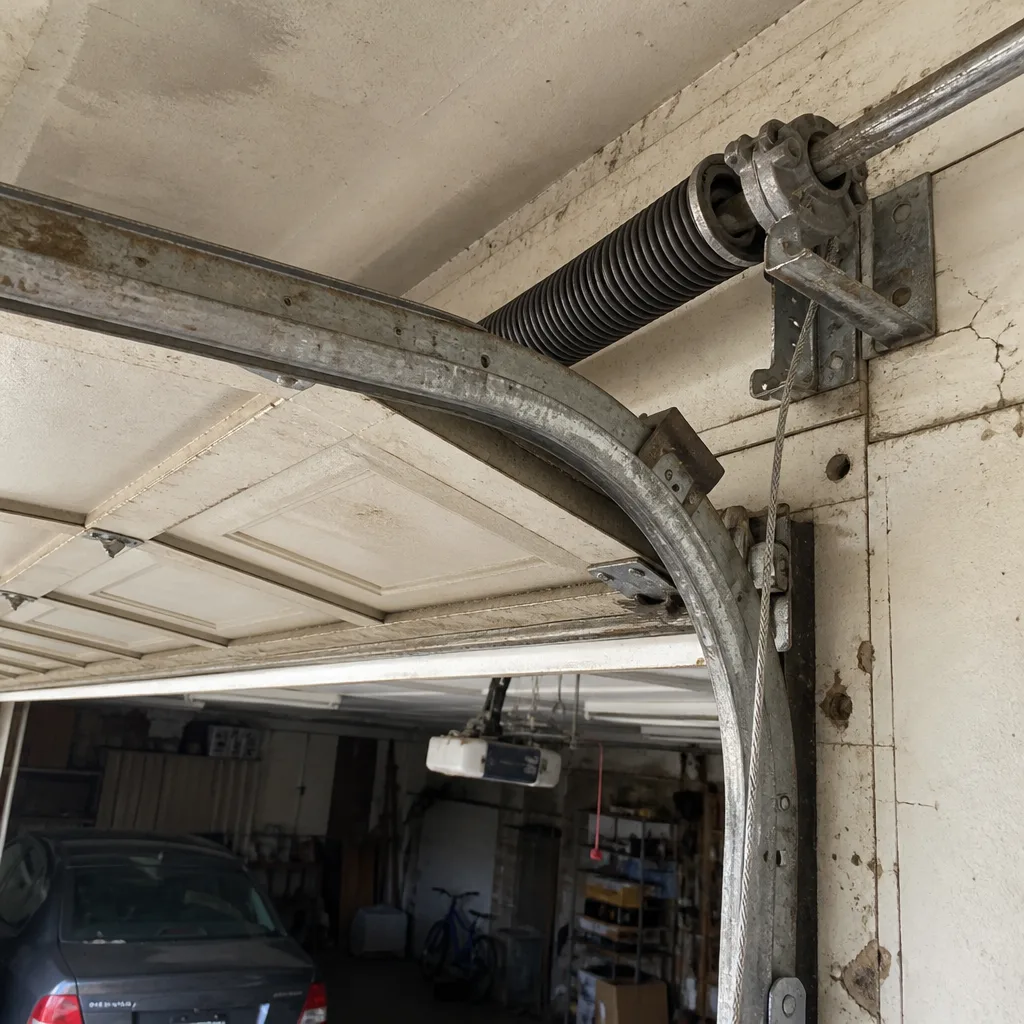
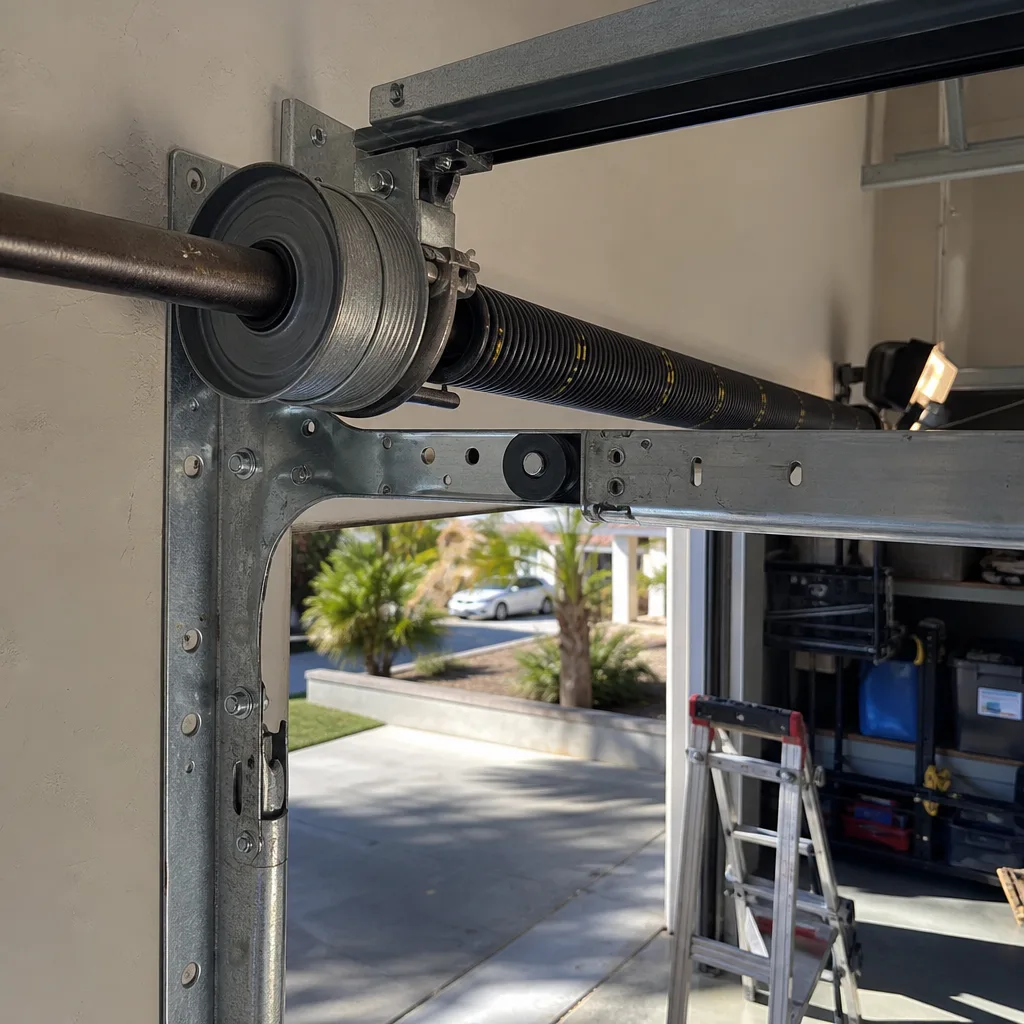
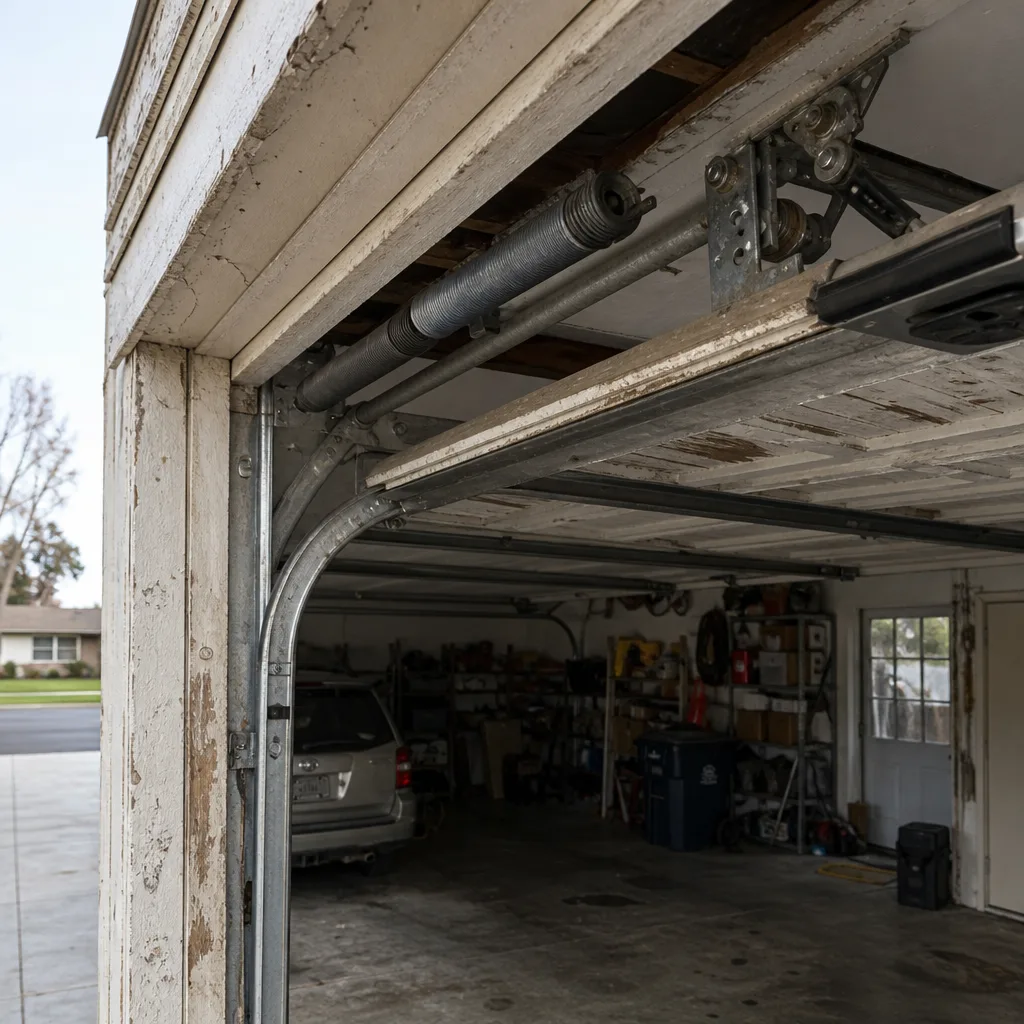
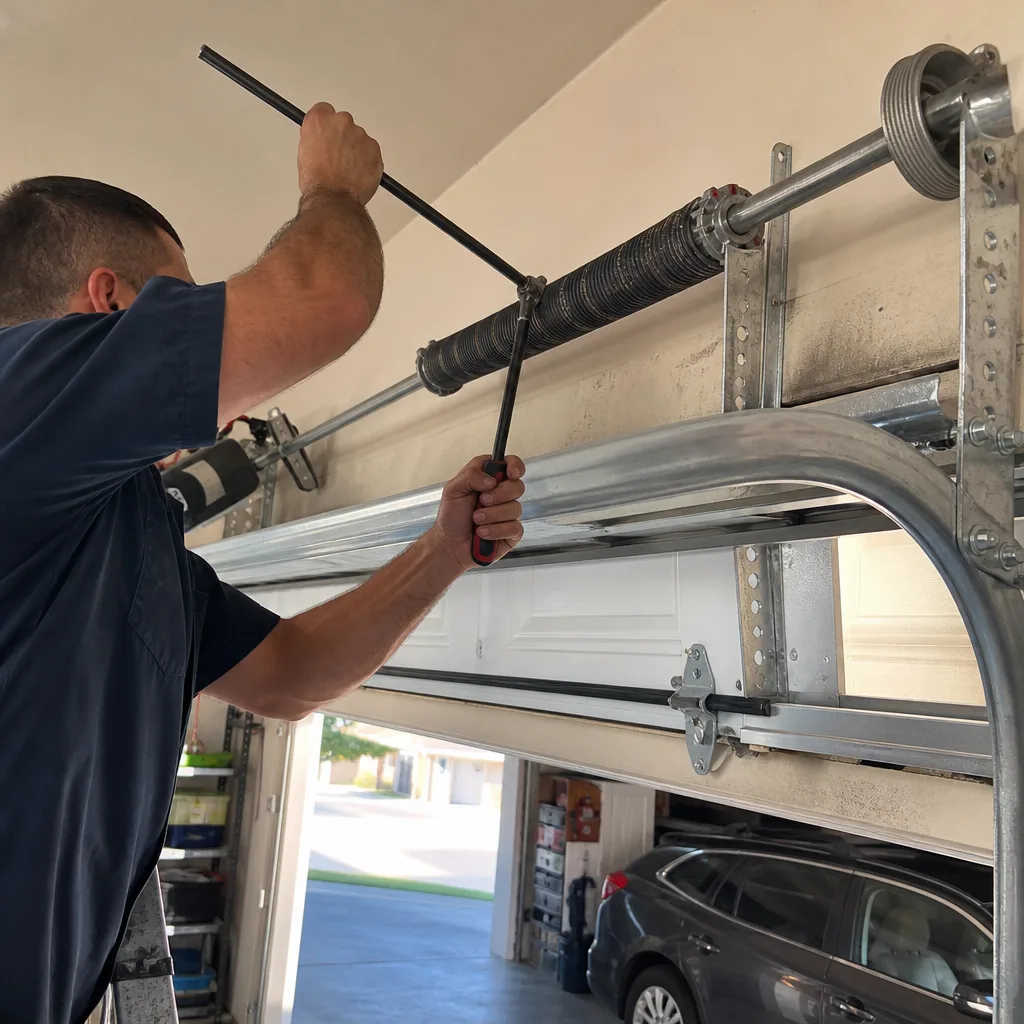
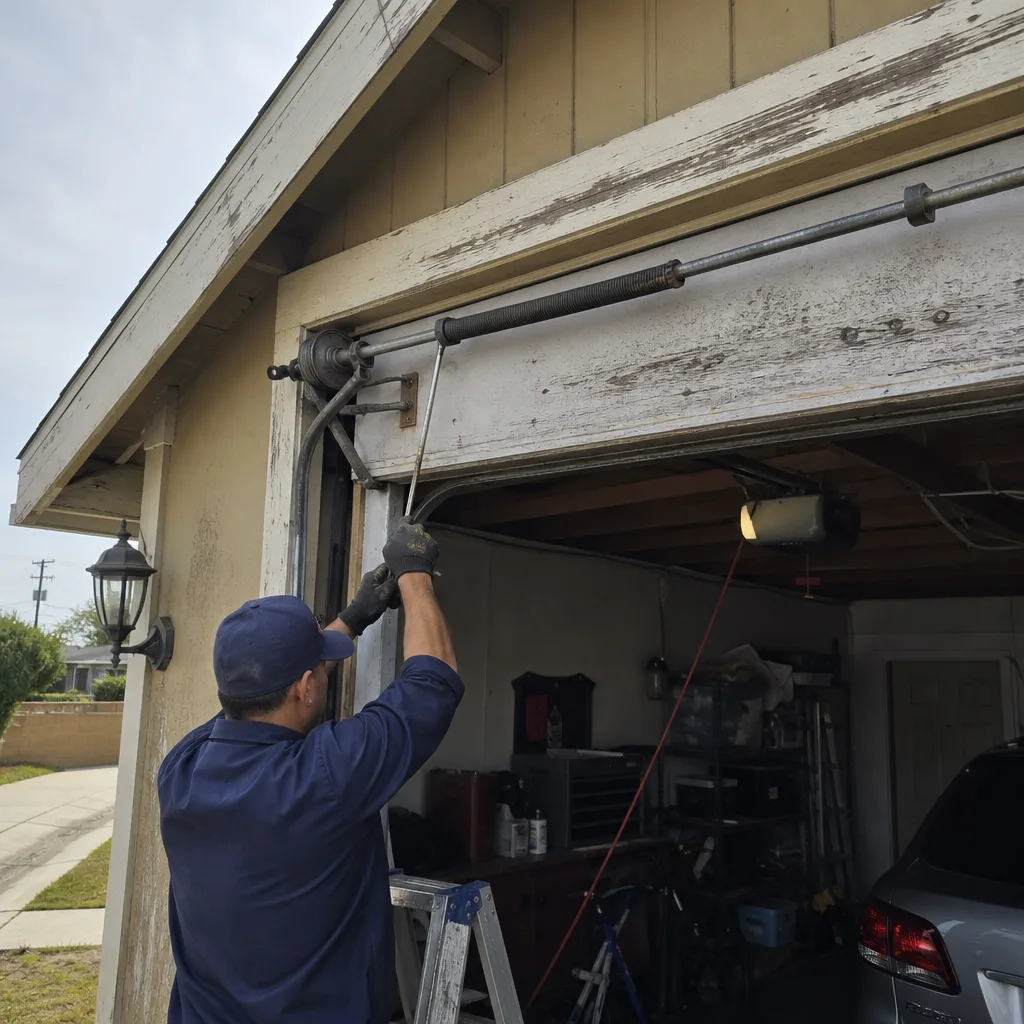
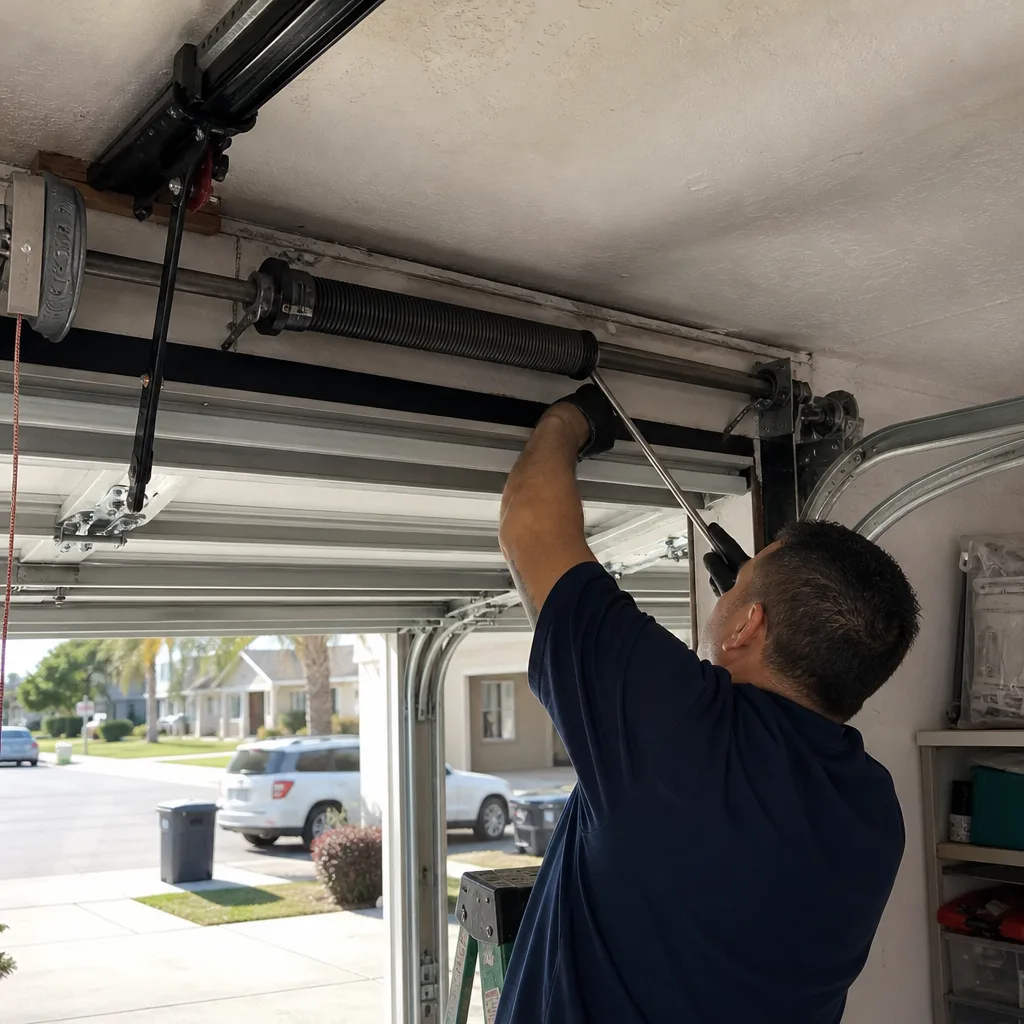
What to look for when you inspect torsion springs: a thin gap or visible separation between coils, rust or discoloration, or a spring that sits slightly “off-axis” compared to the shaft. Any of these means the spring is past its useful life. Do not attempt to replace it yourself. Springs under tension store enormous energy and release it without warning. A broken or weakening spring is a call-a-pro situation. Our team at Garage Door Repair in Riverside carries springs for the brands we service, including Genie, Clopay, and LiftMaster door systems, so we’re not guessing at compatibility. The right fix is a matched spring, not a universal approximation.
Lubrication Intervals Adjusted for Riverside: What to Use and When
The standard advice you’ll read on garage door maintenance blogs says to lubricate your rollers, hinges, and springs once a year. That schedule might work in Ohio or Oregon. It does not work in Riverside. Heat accelerates the breakdown of petroleum-based lubricants. A lithium grease that holds up for twelve months in a mild climate will be thick, gummy, or completely gone after four months of Riverside summer. When lubricant fails, metal-on-metal contact increases, rollers develop flat spots, and hinges begin to bind. The door gets louder, the opener works harder, and small problems compound.
The interval we recommend for Riverside homeowners is every three to four months, with an extra application in early September as seasonal insurance before the cool-down contraction period. What you use matters. Do not use WD-40. It’s a solvent, not a lubricant, and it will strip away whatever protective coating remains. Use a white lithium grease for the hinges and torsion spring, and a silicone-based spray for the track and rollers. Silicone is less likely to attract the fine dust that Riverside air carries, which is important because dust plus grease equals grinding paste.
Here’s the lubrication sequence we use on every service call:
- Close the door fully. Disconnect the opener by pulling the emergency release cord.
- Apply white lithium grease to the torsion spring coils, running a thin bead along the top of the spring while it’s under tension. A light coat is enough; you’re lubricating, not bathing it.
- Apply silicone spray to the roller stems and hinge pivot points. Wipe away excess with a clean cloth.
- Spray a light coat of silicone on the inside of the vertical tracks. Do not grease the track where the rollers ride; that attracts dust and causes binding.
- Reconnect the opener and run the door through two full cycles to distribute the lubricant.
If you do this quarterly in Riverside, you’ll get more cycles out of your rollers and you’ll keep the door quiet. If you’re unsure which lubricant to use on a particular component, or if you have a LiftMaster or Chamberlain opener with a rail system that needs specific handling, our Garage Door Repair Troubleshooting: Common Problems and How to Fix Them and a quick phone call to a garage-door-only specialist will save you from buying three products you don’t need.
Bottom Seal and Weatherstripping: Fighting Dust, Not Just Rain
In most of the country, the bottom seal on a garage door exists to keep rain and snow out. In Riverside, it has a second, arguably more important job: keeping the fine desert dust out of your garage and off your stored belongings. Riverside air carries particulates from the Santa Ana winds, the surrounding hills, and the daily traffic on the 91 and 215 freeways. That dust settles on everything. If your bottom seal is cracked, flattened, or pulling away from the door, the garage becomes a dust trap. The same goes for the weatherstripping around the door’s frame.
Check the bottom seal once a month during the dry season, which in Riverside runs roughly from May through November. Run your hand along the length of the seal. It should feel pliable, not brittle. Riverside’s low humidity and high heat cause rubber and vinyl seals to dry out and crack faster than they would in a coastal climate. A seal that’s starting to harden will fail within a season. Replace it before it splits.
The frame weatherstripping, the flexible strips that run along the sides and top of the door opening, also deserves attention. These strips compress over time, and once they lose their spring, gaps open up. You’ll see daylight through the gaps on a sunny afternoon, which is the easiest way to diagnose the problem. Gaps around the frame don’t just let dust in; they make your garage harder to keep cool if it’s attached to your house, which matters in Riverside where summer garage temperatures can exceed 110 degrees.
Replacing a bottom seal is a straightforward job, but here’s a Riverside-specific wrinkle: the right replacement seal depends on the door’s brand and profile. Clopay and Amarr doors use different T-slot dimensions, and a generic seal from a big-box store often doesn’t seat properly. If you’re not certain which seal fits your door, this is another case where a brand-familiar specialist saves you a second trip to the hardware store. We keep seals on the truck for the major door brands we service, so the replacement fits the door, not the other way around.
Track Alignment Drift: The Concrete Slab Problem
This is the single most overlooked maintenance issue in Riverside, and it has nothing to do with the door itself. It has to do with the ground underneath it. Residential garage slabs in Riverside are poured concrete that sits on soil that expands and contracts with moisture swings. The same soil movement that causes hairline cracks in driveways and sidewalks also causes garage slabs to shift. A slab movement of a quarter inch, which is common over a single summer of heat and irrigation cycles, is enough to change the angle of the vertical tracks that guide the door.
When tracks drift out of alignment, you’ll notice a few things. The door may hesitate halfway up. The rollers may make a grinding sound on one side. The door may look crooked when partially open. Over time, misaligned tracks force the rollers to ride at an angle, which accelerates roller wear and puts side load on the hinges. The opener works against a door that’s no longer running true, and eventually the strain cycles back to the springs.
The fix involves loosening the track brackets, realigning the track, and retightening. It sounds simple, but there’s a judgment call involved: how much drift is normal, and how much indicates a slab problem that will require re-shimming the track? A track that’s shimmed wrong fights the door constantly. We routinely address this on service calls throughout Riverside, from La Sierra to Orangecrest, and the telltale symptom is almost always the same: the door worked fine for years, then gradually started binding on one side with no obvious cause. If you notice your door drifting or rubbing on one side, that’s worth a professional check before the misalignment damages your rollers.
Opener Thermal Protection: Heat Stress or Mechanical Fault?
Riverside garages get hot. There’s no way around it. An attached garage in August can reach 120 degrees, which is near the upper limit for many garage door opener motors. Most modern openers, including LiftMaster and Chamberlain models, have a thermal protection circuit that shuts the motor off if it gets too hot. That’s good engineering, but it creates a diagnostic problem for homeowners: when the opener stops working mid-cycle on a hot afternoon, is it protecting itself from heat, or is there a mechanical fault underneath?
The answer often depends on when the failure happens. If the opener refuses to run in the late afternoon heat but works fine in the morning, that points to thermal cutoff. The fix may be as simple as improving garage ventilation or waiting for cooler weather. If the opener trips repeatedly in mild conditions, or if it starts and then stops within seconds, that’s a sign of a mechanical problem: a door that’s out of balance, a failing motor capacitor, or a limit switch that needs adjusting.
Here’s the sequence we walk through with Riverside customers:
- Run the door manually by pulling the emergency release. If the door feels heavy or won’t stay open, the problem isn’t the opener; it’s the door balance. A door that’s properly balanced should stay in place at the halfway point.
- If the door moves freely by hand, reconnect the opener and try again in the cool of the morning. If it works, you’re likely dealing with thermal cutoff.
- If the opener fails even when cool, or if it hums without moving, that’s a motor or capacitor issue. This is a replace-the-part situation, not a lube-and-wait situation.
Riverside’s heat is also harder on opener remotes and wall buttons than people expect. The plastic housings warp, the internal batteries degrade, and the solder joints inside keypads fail from thermal cycling. A dead remote on a hot afternoon isn’t necessarily the opener’s fault. Replace the battery first, then check the wall button, then suspect the opener logic board. These diagnostics are part of what Garage Door Opener Repair in Riverside covers, and because we work on Genie, Chamberlain, and LiftMaster openers regularly, we can usually tell you over the phone whether it’s a 30-second fix or a service call.
The 10-Minute Monthly Safety Walkthrough
This is the checklist we give to every homeowner who asks what they should be doing between professional inspections. It takes 10 minutes and it catches most problems before they become breakdowns. Run through it in the morning when the door is cool.
- Auto-reverse test: Place a roll of paper towels on the floor under the door’s path. Close the door. It should reverse within 2 seconds of touching the towel roll. If it doesn’t, the opener’s force settings or sensors are off. This is a safety issue, not just a convenience issue.
- Balance check: Pull the emergency release and manually lift the door to the halfway point. Let go. The door should stay in place. If it drops or rises, the springs need professional attention.
- Visual spring check: Look at both torsion springs with the door closed. Check for visible gaps between coils, rust, or one spring sitting unevenly. Any of these means replacement is near.
- Roller inspection: With the door half open, check each roller. Look for flat spots, visible cracking in nylon rollers, or wobble. A worn roller wears the track.
- Track check: Run your hand along both vertical tracks with the door closed. They should be smooth and straight. Any bends, gaps at the brackets, or loose bolts are a sign of drift.
- Seal check: Close the door and look along the bottom from the inside. No daylight should be visible. Run your hand along the bottom seal outside to check for cracks or brittleness.
If all six checks pass, your door is in good shape for the month. If any check fails, you’ve found a problem while it’s still manageable. That’s exactly what this list is for. A spring replacement costs less when the spring hasn’t snapped and taken a cable with it. A track adjustment is quick when the track is still salvageable.
Here’s a quick reference table for what you’re checking and what failure looks like:
| Component | What Normal Looks Like | What Failure Looks Like | Riverside-Specific Concern |
|---|---|---|---|
| Torsion springs | Evenly spaced coils, no gaps | Gaps, rust, uneven seating | Summer heat accelerates fatigue; check in September |
| Rollers | Round, smooth, quiet | Flat spots, cracking, wobble | Heat hardens nylon rollers faster |
| Tracks | Straight, tight brackets | Bends, loose bolts, visible gaps | Slab expansion causes seasonal drift |
| Bottom seal | Pliable, full contact | Cracks, gaps, brittleness | Dust intrusion is the bigger risk than rain |
| Opener | Smooth, consistent operation | Mid-cycle stops, humming, refusal in afternoon heat | Thermal cutoff vs. mechanical fault diagnosis |
A Riverside-Specific Seasonal Maintenance Schedule
Riverside doesn’t have four seasons in the way a Maine or Minnesota homeowner understands them. But it does have a distinct rhythm: a long hot stretch from May through October, a brief windy period in the fall, and a mild winter with occasional rain. Here’s how that rhythm maps to garage door maintenance.
March – April: Pre-Heat Lubrication
Before the first heat wave, do a full lubrication pass. Use the sequence in the lubrication section above. Check the bottom seal for cracks left over from winter rain and Santa Ana dust. This is the best time to replace a seal that’s starting to harden, because it’ll only get worse in the summer.
May – August: Monthly Safety Checks and Dust Management
During peak heat, run the 10-minute monthly walkthrough every month without fail. Pay particular attention to the opener’s behavior on very hot afternoons. If it’s cutting out, it may be thermal protection doing its job, but it may also be a motor on its way out. Keep the tracks clean; Riverside dust plus lubricant equals a grinding paste that wears rollers and hinges. Wipe the tracks with a dry cloth monthly.
September: The Critical Spring Inspection
This is the month we want every Riverside homeowner to mark. The summer has stressed the springs through thermal expansion and contraction. The first cool nights are coming. Inspect the torsion springs carefully. Look for gaps, rust, or uneven coils. If a spring is going to fail, September is when you want to know about it, not October when the cool snap snaps it. If you see anything questionable, get a professional opinion now. A spring replacement in September is a planned expense. A snapped spring in October is an emergency call.
October – November: Temperature Transition Adjustments
As temperatures drop, metal contracts. That contraction is what finishes off weakened springs, but it also affects other components. Cables that were taut in July may have developed slight slack. Hinges that were loose may now bind. Run the monthly walkthrough with extra attention to how the door moves through its full cycle. Listen for new creaks or pops. Those sounds are the door telling you something changed dimensionally.
December – February: Rain Prep (Yes, Riverside Gets Rain)
Riverside’s rainy season is short, but when it comes, a deteriorated bottom seal lets water pool under the door and into the garage. Before the first significant rain, re-check the seal. Make sure the weatherstripping around the frame is still flexible and making contact. If your garage floor slopes toward the door, which is common in older Riverside homes, a water barrier at the seal is your only defense.
If you’re reading this and realizing you’re already behind schedule for Garage Door Repair in Riverside or a maintenance check, don’t wait for failure. Garage Door Installation in Riverside customers get a maintenance run-through at the time of install, but every existing door deserves the same baseline assessment. Our work is garage doors and openers only, which means the tech who shows up knows exactly what to look for on your specific system.
Common Mistakes to Avoid
- Lubricating the track where the rollers ride. This attracts Riverside dust and creates a grinding paste that accelerates roller and hinge wear. Lubricate the roller stems and hinge pivots, not the track surface.
- Using WD-40 as a garage door lubricant. It’s a solvent that strips protective grease. Use white lithium grease for metal-to-metal contact and silicone for nylon-to-metal.
- Ignoring a door that’s become “a little noisier.” Noise is the first symptom of almost every mechanical failure in a garage door. A door doesn’t gradually get louder for no reason. The reason is usually a failing roller, dry hinge, or unbalanced spring.
- Testing the auto-reverse feature with a hand instead of an object. Your hand reflexively pulls back. A roll of paper towels doesn’t. Use the roll of paper towels every single month.
- Replacing one spring on a two-spring system. When one torsion spring fails, the other is at the same point in its life cycle. Replacing only the broken spring saves money today and costs a second service call within months. Replace both. Any competent technician will tell you the same thing.
- Postponing September spring inspection because “the door still works.” By the time a spring shows obvious failure, it’s often already snapped or within days of it. The September check is about catching early fatigue, which looks subtle but is visible to a trained eye.
When to Call a Professional
Some maintenance tasks are genuinely DIY: lubricating hinges, cleaning tracks, replacing a remote battery, testing the auto-reverse. Others are not. If you see a gap or rust on a torsion spring, if your door is out of balance, if a cable has come off the drum, or if your opener is cutting out repeatedly in cool conditions, that’s the moment to stop and call someone who does this work daily. Torsion springs and cables are under enough tension to cause serious injury. At Blue Ribbon Garage Door Repair, garage doors are all we do, and that focus means we’ve seen your specific problem on your specific brand. Not as one job among many, but as our entire trade. If you’re in Riverside, call (877) 283-1083 for a free estimate on our Garage Door Repair services. We work on the brand you already have, and we’ll tell you what the door actually needs, not what’s easiest for us to sell.
Frequently Asked Questions
Every three to four months, with an extra pass in early September. Riverside heat burns off lubricant faster than the standard 12-month recommendation accounts for. Wait a full year between lubrications and you’re running dry for half that time.
Because summer heat stresses the torsion spring through repeated expansion and contraction. The metal develops micro-fractures over 60 to 90 days of hot days and cooler nights. When the first genuinely cool night of autumn arrives, the metal contracts suddenly and the weakened spring snaps. It’s the most common October service call we get in Riverside.
It’s both. Dust that gets into the tracks and onto lubricated surfaces acts as an abrasive. It accelerates roller wear and makes the door run rough. In Riverside specifically, the dry season brings constant fine particulate from Santa Ana winds and freeway traffic, so track cleaning and seal maintenance matter more than they would in a wetter climate.
Not a different seal type, but you need to check it more often. Riverside’s heat and low humidity cause rubber and vinyl seals to dry out and crack faster than they would in coastal or humid regions. A seal that’s gone brittle will fail within a season, so monthly checks during the dry months are the right rhythm.
We work on all eight of the major residential brands: LiftMaster, Chamberlain, Genie, Clopay, Amarr, Wayne Dalton, Craftsman, and Raynor. That cross-brand familiarity matters because a Blue Ribbon Garage Door Repair home technician already knows the quirks of whatever system is on your house. We don’t push you toward a different brand; we fix the one you have.
Run the door manually by pulling the emergency release. If the door is heavy or won’t stay at the halfway point, the problem is the door, not the opener. If the door moves easily and the opener works fine in the cool of the morning but trips on hot afternoons, it’s thermal protection doing its job. If it fails even when cool, it’s a mechanical or electrical fault. Call (877) 283-1083 and we’ll help you figure out which scenario you’re in before rolling a truck.
The Bottom Line
Garage door maintenance in Riverside is not a once-a-year ritual. It’s a rhythm that follows the climate: pre-heat lubrication in spring, monthly safety checks through the long summer, a critical spring inspection in September, and a seal and balance check before the winter rains. The five components that fail most often here, springs, rollers, seals, tracks, and openers, all give early warning signs if you know what to look for. The catch is that Riverside’s conditions make some of those signs subtler than you’d expect. A spring that’s been weakened by heat looks fine until it isn’t. A track that’s drifted from slab movement creeps slowly enough to go unnoticed. The monthly walkthrough and the September spring check are your insurance against being the homeowner who finds out in October. For more guides & resources, see our blog. And when a problem does surface, the right fix is always cheaper than the emergency repair. Call (877) 283-1083 anytime for a free estimate. We work on the brand you already have, and we’ll tell you the truth about what it needs.
Written by the team at Blue Ribbon Garage Door Repair, serving Riverside since 2013.
See the difference
 Before
 After
 Before
 After
 Before
 After