
Last updated October 30, 2026
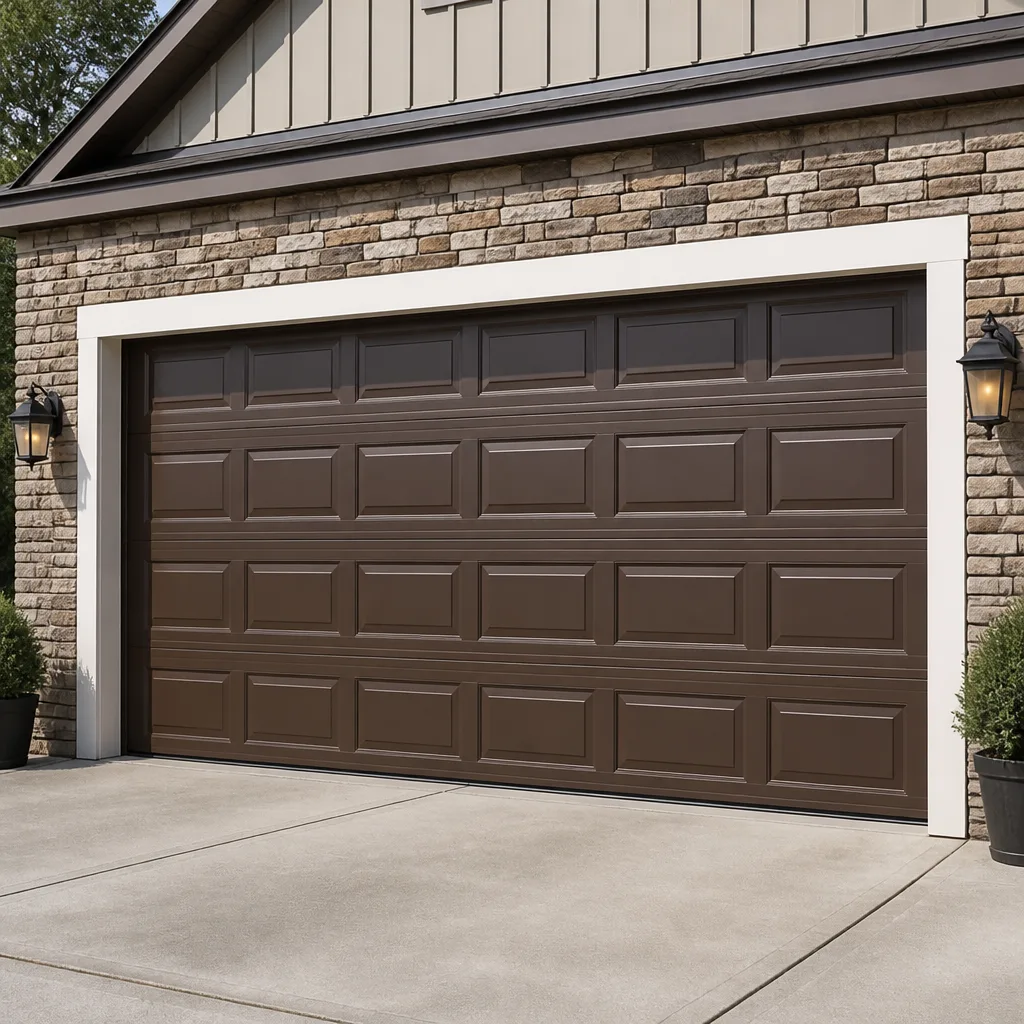 Raised-panel steel
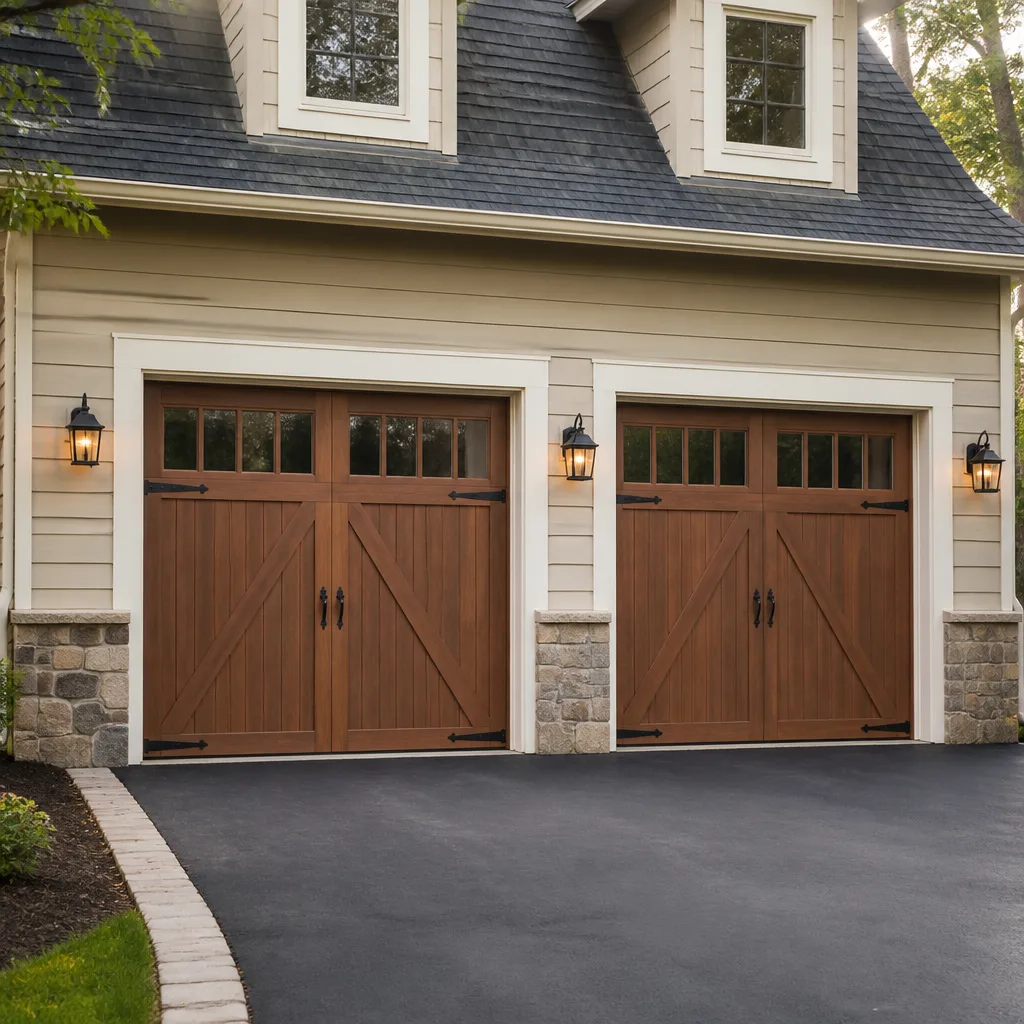 Carriage house
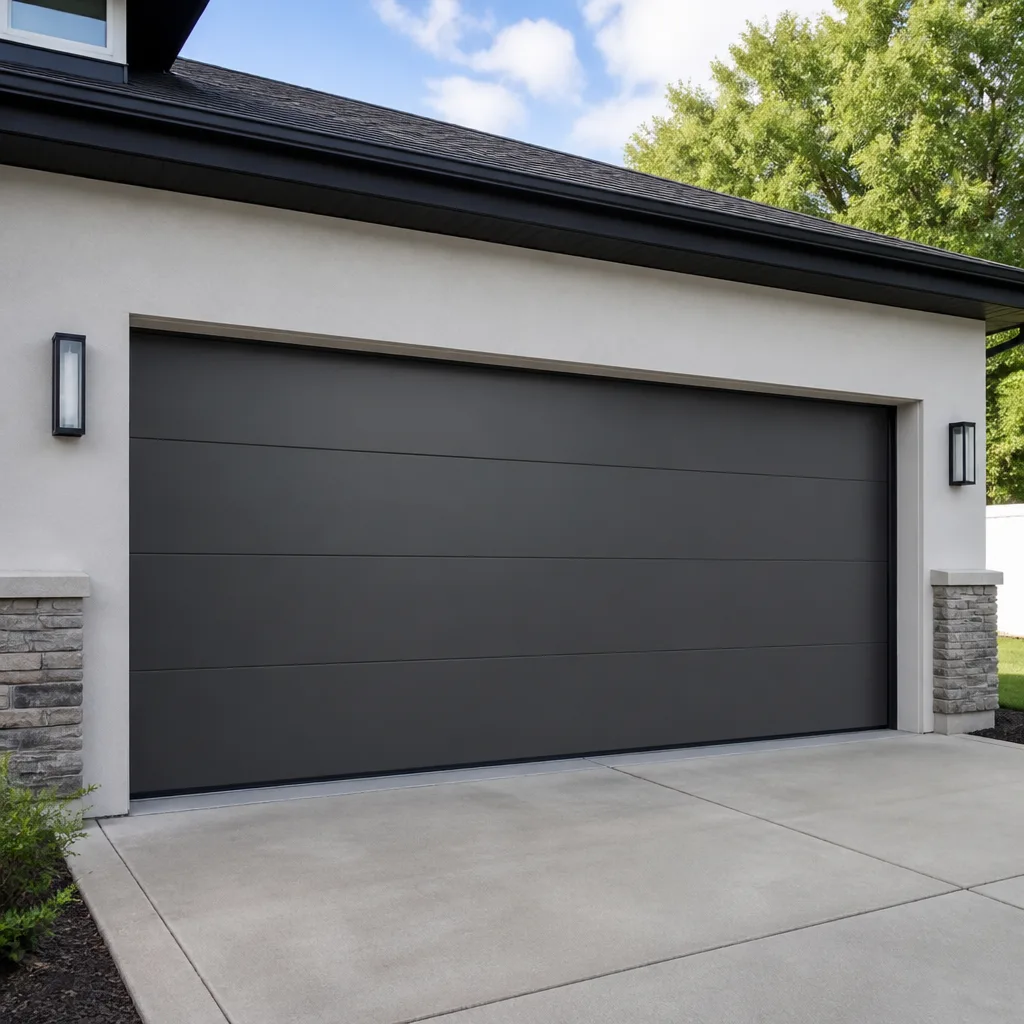 Modern flush
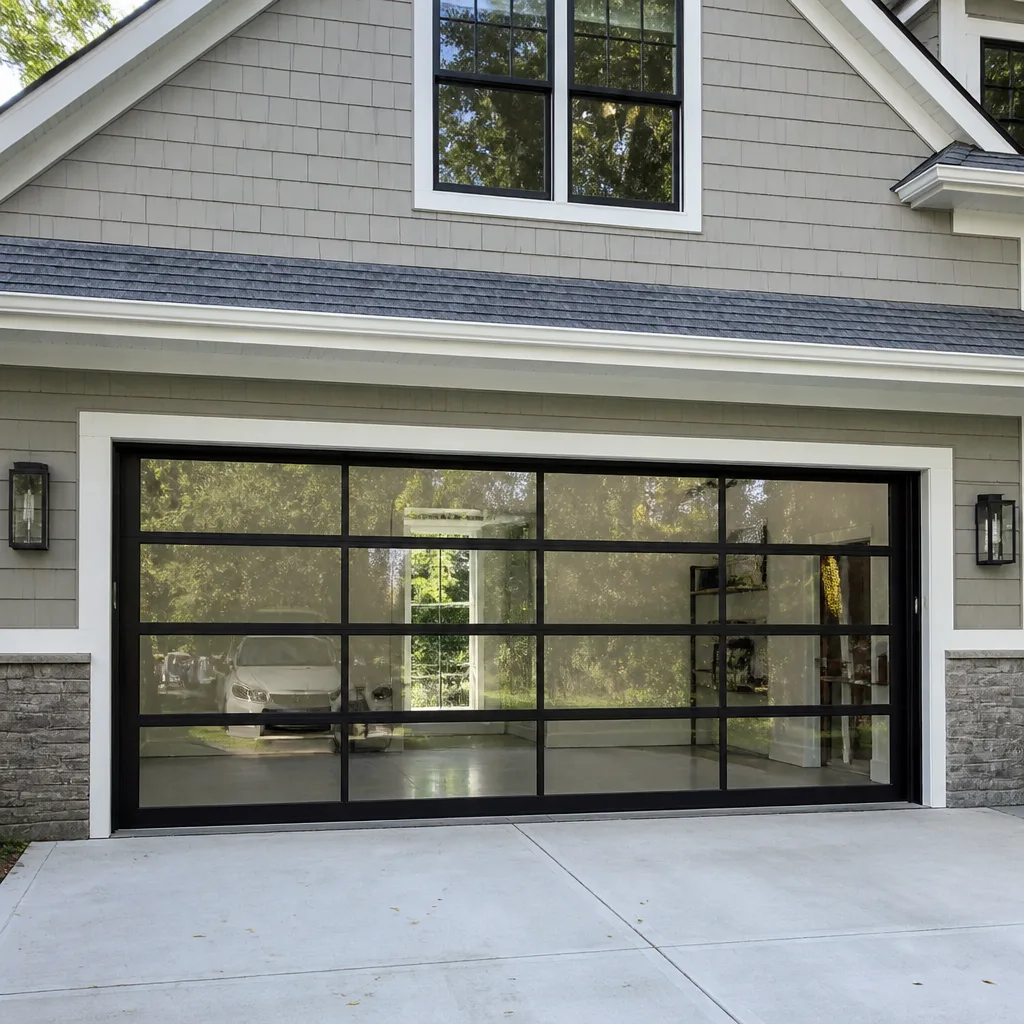 Full-view glass
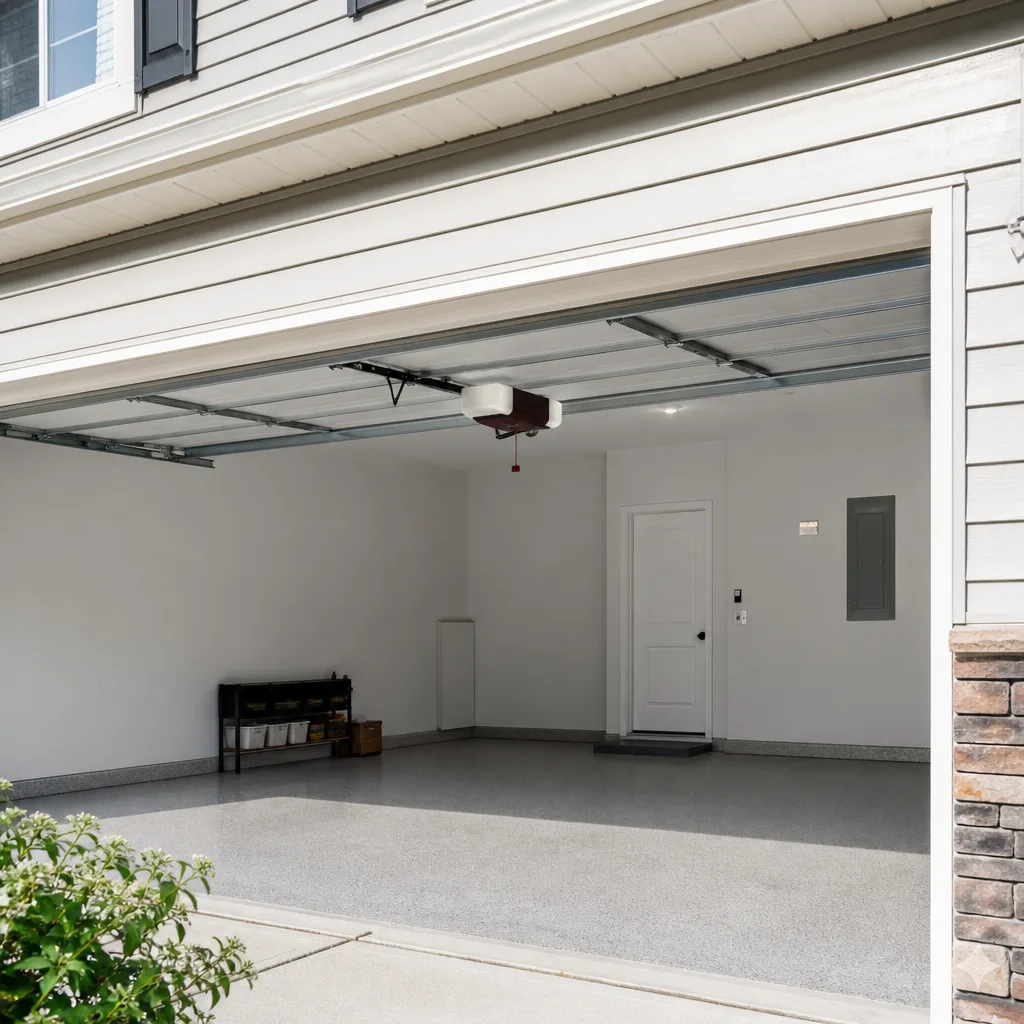 LiftMaster openers
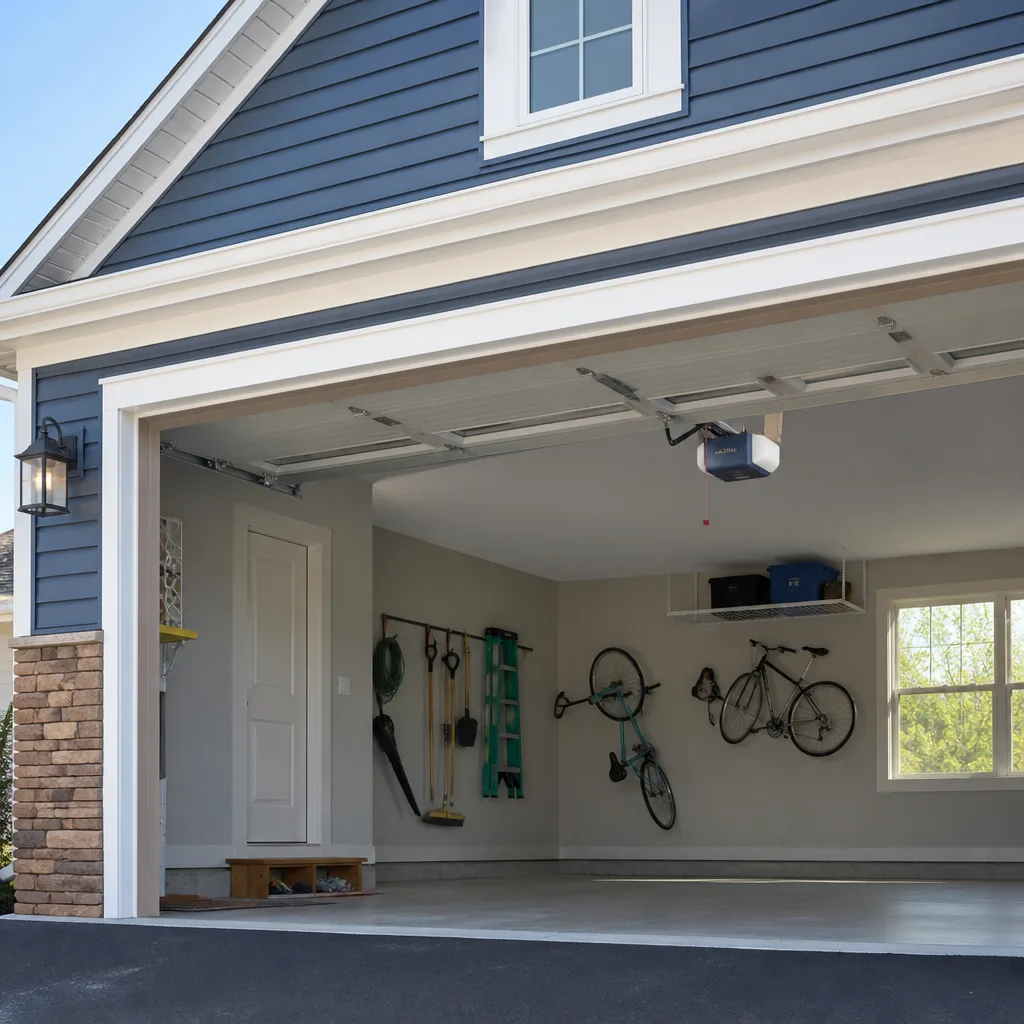 Chamberlain openers
Full 25-point door and opener safety check with every visit - springs, cables, rollers, tracks, and your LiftMaster or Chamberlain opener included
You get a price before we start. It does not change when the truck arrives.
Get your free estimateSeasonal Garage Door Care for Riverside: Year-Round Homeowner’s Guide
Riverside gets roughly 277 sunny days a year. That sounds like a reason to skip seasonal garage door upkeep, but it’s actually the opposite. The Inland Empire’s weather doesn’t punish doors with snow and ice. It punishes them with heat, UV, wind, and sudden temperature swings that most maintenance calendars never address. This guide reframes garage door care around what Riverside actually experiences: two dominant stress periods, not four seasons. You’ll learn what to check in April before the first 100-degree week, how to tell the difference between a thermal shutoff and a mechanical failure in August, why Santa Ana winds in October demand a specific set of inspections, and what a 35-degree January night does to your torsion springs. If you depend on your door daily, this is the maintenance schedule that matches the climate you actually live in.
Styles & brands we work with
Quick Answer
Seasonal garage door maintenance in Riverside means preparing for two stress windows, not four seasons: pre-summer heat prep in April (high-temp lubrication, track gap checks, opener thermal testing) and pre-Santa Ana prep in October (cable inspection, roller condition, wind-bracing verification). The core tasks are lubricating moving parts with grease rated above 250°F, testing the auto-reverse safety system, checking spring tension, and inspecting rollers, cables, and weather seals. A homeowner can handle lubrication and visual checks in about 30 minutes per season, as outlined in The Complete Guide to Garage Door in Riverside. Spring adjustment and cable replacement should always go to a trained technician.
Table of Contents
- Why Riverside’s Climate Demands a Different Maintenance Calendar
- Pre-Summer Prep: The April Checklist That Prevents August Failures
- Mid-Summer Monitoring: Thermal Shutoff vs. Mechanical Failure
- Fall Santa Ana Prep: Wind, Dust, and the Off-Track Risk
- Winter Cold-Snap Effects on Springs and Openers
- Year-Round UV Degradation on Wood and Composite Doors
- The 10-Minute Monthly Routine for Riverside Homeowners
- Common Mistakes to Avoid
- When to Call a Professional
- Frequently Asked Questions
- The Bottom Line
Why Riverside’s Climate Demands a Different Maintenance Calendar
Most garage door care guides are written for places with real winters. They tell you to check for ice in the tracks, replace weather stripping before the first freeze, and switch to a winter-grade lubricant. None of that applies to Riverside. What applies is heat accumulation, UV exposure, fine wind-blown dust, and temperature swings that flex metal components over thousands of cycles.
Riverside sits inland, locked between the Santa Ana River basin and the Box Springs Mountains to the east. Summer highs regularly exceed 100°F from June through September. But the bigger issue is the swing: a 40-degree difference between a 2 p.m. high and a 5 a.m. low is normal from May through October. Metal expands during the day and contracts at night. Over a decade, that repeated movement loosens fasteners, warps track alignment, and fatigues cable strands in ways a stable coastal climate never does.
Then there’s the wind. Santa Ana events between October and February bring sustained 30-50 mph gusts out of the northeast, sometimes higher in the canyons around La Sierra and the Arlington Heights area. A double-wide garage door presents roughly 130 square feet of surface area to that wind. If the door isn’t seated correctly in its tracks, a strong gust can push it sideways, pop a roller, and leave you with a door wedged halfway open at the worst possible time.
The good news: a maintenance schedule built around these two stress windows, pre-summer and pre-Santa Ana, catches most failures before they happen. That’s the calendar this guide follows.
Pre-Summer Prep: The April Checklist That Prevents August Failures
The most common August service call in Riverside is a door that stops moving midday. The second most common is a door that’s suddenly loud, grinding, or jerky. Both trace back to what didn’t happen in April. Four specific tasks in spring prevent most of what breaks in summer.
Step 1: Switch to High-Temperature Grease
Standard white lithium grease breaks down around 200°F. A garage door track in direct afternoon sun on a 105°F day in the Wood Streets or Canyon Crest can reach 140-160°F at the rail surface. Add motor heat from the opener and you’re pushing past what ordinary lubricant handles. Use a synthetic or lithium-complex grease rated for at least 250°F, ideally higher. Apply sparingly to the roller stems, hinge pins, and the opener rail. Do not grease the track itself; the rollers roll on the track, they don’t slide, and grease there just collects dust.
Step 2: Check Track Expansion Gaps
This is a Riverside-specific check you won’t find in a generic guide. Metal tracks expand in heat. Most doors have some play built into the track mounting brackets. Confirm the gap is consistent on both sides. If one side is tight and the other has visible play, the door runs slightly crooked under load, which accelerates roller wear and strains the opener motor. You’re looking for obvious asymmetry, not measuring with a micrometer.
Step 3: Clean and Inspect the Rollers
Riverside’s dry air means fine dust gets everywhere. That dust mixes with old grease on rollers and forms a paste that acts like sandpaper. Wipe each roller clean. Check for flat spots on nylon rollers (they should roll, not slide) and cracks on any remaining metal rollers. If you have nylon rollers more than seven years old, replacement is a reasonable preventive step given our heat cycles. This falls under garage door repair in Riverside when the rollers themselves are past saving, but cleaning is a homeowner task.
Step 4: Test the Auto-Reverse Safety System
Place a 2×4 flat on the ground under the door’s path. Close the door. It should reverse within two seconds of contact. If it doesn’t, the force setting is too high or the sensors are misaligned. This isn’t seasonal, exactly, but pre-summer is the right time because kids are home from school and garage doors cycle more in June, July, and August than any other months. The garage door opener repair in Riverside technicians we send out check this on every call for a reason: it’s the most important safety feature on the door.
Step 5: Re-Tension the Weather Seal
The bottom seal, the rubber strip along the door’s lower edge, softens in heat and can sag or tear. Run a hand along it. If it’s brittle, cracked, or no longer makes full contact with the concrete, the summer dust and hot air come straight into the garage. Replacing the bottom seal is a half-hour fix for a homeowner or a quick service call. Either way, it’s a pre-summer item, not a mid-summer discovery.
Step 6: Run a Balance Check
Pull the release handle and lift the door manually to waist height. It should stay put, not drift up or down. If it drops, the springs are losing tension and the opener is working harder than it should. That extra load is what kills opener motors in August. If the door drifts more than a few inches, the springs likely need attention. That’s a job for a technician; springs under tension are dangerous. For now, note the drift and call before the heat makes it worse.
Mid-Summer Monitoring: Thermal Shutoff vs. Mechanical Failure
Here’s the scenario we hear most from Riverside homeowners in July and August: the door was working fine all morning, then around 3 p.m. it started acting up. It stopped mid-cycle, or it wouldn’t respond to the wall button. The assumption is always that the opener died. Often, it didn’t.
Most modern openers, especially LiftMaster and Chamberlain models with DC motors, have a thermal shutoff. When the motor’s internal temperature exceeds a threshold, the unit cuts power to protect itself. On a 108°F day in the Alessio Corridor or Mission Grove, the air inside a garage can hit 130-140°F. The motor is already heat-soaked before it runs once. The thermal shutoff is doing its job. The fix is ventilation and timing: run the door in the early morning when you can, keep the garage door open for a few minutes after parking a hot car inside, and avoid cycling the door repeatedly during peak heat. If the opener works fine at 7 a.m. and cuts out at 3 p.m., you’re likely looking at thermal shutoff, not a dead motor.
Mechanical failure looks different. A grinding sound before the door stops, a door that stops in a different position each time, visible shaking as it travels, or a door that reverses on its own mid-cycle all point to physical problems: worn rollers, a misaligned track, a failing spring, a stripped gear. We work on the brand you already have, whether it’s a Genie screw drive or a Raynor belt drive, and the diagnostic path is the same: rule out heat first, then inspect the mechanicals. For help picking your next system, see Choosing the Right Garage Door Brand: A Buyer’s Guide for Riverside.
One more summer-specific item: the sun’s angle on the photo-eye sensors. If your sensors face west in a neighborhood like Victoria or Orangecrest, late-afternoon sun can hit them directly in July. The sensors interpret direct sunlight as an obstruction and the door refuses to close. Shade them with a small hood or piece of cardboard taped above the lens. If the problem only happens between 4 p.m. and 7 p.m. in summer, that’s almost certainly the cause. It’s not a faulty opener. It’s the sun. And in Riverside, there’s plenty of that.
Fall Santa Ana Prep: Wind, Dust, and the Off-Track Risk
Santa Ana winds in Riverside are a bigger garage door threat than any winter weather. Strong northeast gusts funnel through the Santa Ana River corridor and hit the hillside neighborhoods, La Sierra, and the newer developments up toward Alessandro Heights with real force. A 40-mph gust against a double door can exert hundreds of pounds of lateral pressure.
The most common October problem is a door pushed off track. It happens when a gust hits the door while it’s partially open, or when the door is fully closed but has worn side seals that let wind get behind the panels and push outward. Once one roller pops, the weight shifts, the door jams, and if you keep pressing the opener button, you bend the track and compound the damage.
The Pre-Santa Ana Checklist (October, before the first big wind event)
- Inspect every roller stem for bending. Rollers take lateral wind load through their stems. A bent stem is the first thing to fail in high wind. Spin each roller by hand and look for wobble.
- Check the cables for fraying. Lift cables carry spring tension when the door operates. Wind stress accelerates wear on already-frayed cables. Look for loose strands near the bottom bracket. If you see any, call before the wind does the work for you. A snapped cable under load is a violent event.
- Verify the side seals and top seal make full contact. Gaps along the sides let wind pressurize the gap between door and frame. The bigger the gap, the more lift and lateral force the wind generates. Replace compressed or torn seals before October.
- Confirm the door closes fully and squarely every time. Run the door down and check that it sits flush on both sides. A door that’s just slightly off will catch wind differently. Fixing a minor alignment issue in October is far cheaper than replacing a bent track in November.
- Remove loose items around and above the door opening. Santa Anas turn garden tools, pool toys, and garage clutter into projectiles. A shovel that slides into the track while the door is moving turns a wind event into a mechanical failure.
Most wind-related off-track incidents are preventable with this 20-minute inspection. And if a door does come off track during a Santa Ana event, don’t try to force it. Pull the release cord, leave the door where it is, and call a professional. Garage doors are all we do, and we’ve seen the repair bills that result from homeowners trying to muscle a jammed door back into place.
Winter Cold-Snap Effects on Springs and Openers
Riverside doesn’t freeze. But 35°F nights in December and January are common, especially in the lower-lying areas along the river bottom and up on the plateau near UCR. That’s enough to affect your door in a specific way: torsion springs get stiffer as they get colder.
Spring steel has a measurable increase in stiffness at lower temperatures. A spring that delivers 100 pounds of lift at 70°F delivers slightly more resistance at 35°F. The result: the opener works harder to lift the door on cold mornings. For a door with properly balanced springs, the difference is negligible. For a door with springs that are already within a year or two of the end of their service life, that added stiffness can push the opener over its stress threshold.
What does this look like in practice? A door that’s slow to lift on the first cycle of a cold morning. A humming sound from the opener as it strains. A door that hesitates at the transition point where the bottom panel rounds the curve in the track. If you notice these only on the coldest mornings and the door behaves once the day warms up, your springs are marginal. The cold isn’t the root cause; it’s the amplifier. Replacing springs is not a homeowner job, period. Torsion springs are under hundreds of pounds of tension and can cause serious injury or death when mishandled. That’s a technician call, every time.
Also check the opener’s sensitivity settings in winter. As things contract, a door that was balanced in September can behave differently in January. If the opener’s auto-reverse triggers for no obvious reason on cold mornings, the force sensors are likely reading the increased resistance and backing off. A sensitivity adjustment is simple. A broken spring is not. Know which one you’re dealing with.
Year-Round UV Degradation on Wood and Composite Doors
Riverside averages 277 sunny days a year, and the summer UV index regularly reaches 10 or 11, which is classified as extreme. That sun is relentless on door faces. Wood doors fade, crack, and delaminate. Composite doors hold up better but lose their finish and can warp at the edges. Metal doors are safer from UV but fade and absorb heat, which stresses the insulation and panes.
The Riverside-specific issue is the combination of high UV and low humidity. In coastal climates, the marine layer moderates sun exposure and the air holds moisture. Here, the air is dry and the sun is direct for 14 hours a day in June. Wood loses its natural oils. Clear coats oxidize to a chalky white film. Sealants shrink and crack. What starts as cosmetic becomes structural when moisture from the occasional winter rain gets into the exposed wood and starts the expansion-contraction cycle all over again.
For wood and composite doors, the annual rhythm looks like this: inspect the finish every March and September. Look at the lower panel edges, the areas around windows, and any south-facing or west-facing sections. These get the worst of the afternoon sun. If the finish is chalky, flaking, or faded in spots, sand lightly and reapply a UV-blocking sealant or paint. For composite doors from manufacturers like Amarr or Wayne Dalton, a quality exterior-grade coating designed for composites extends the panel life significantly. The door hardware matters too: sun-rotted wood around hinge mounts is a structural failure waiting to happen, not just an eyesore.
If you’re considering a new door and your current one faces west, this is worth discussing during garage door installation in Riverside. Choosing the right material and finish for a west-facing exposure saves years of maintenance. Some neighborhoods, like Orangecrest with its newer construction and wider streets, catch more afternoon sun than the older, tree-lined areas near Magnolia Center. The right door for one house isn’t automatically the right door for another.
The 10-Minute Monthly Routine for Riverside Homeowners
Between the two big seasonal pushes, a quick monthly check catches small problems before they become service calls. This is the routine we recommend for every homeowner in Riverside, and it’s designed to be done without tools.
- Watch a full open and close cycle. Stand inside the garage and watch the door travel. It should be smooth, consistent, and quiet. No hesitation, no sideways movement, no panel flex.
- Listen. A new sound, a different pitch, a rhythmic thumping as the door moves, all mean something. Most mechanical failures announce themselves weeks before they happen. The sound is the announcement.
- Check the auto-reverse monthly. The 2×4 test takes 30 seconds. It’s the single most important safety feature on the door.
- Look at the cables and springs. Don’t touch them. Just look. Frayed strands, gaps between spring coils, rust, or a spring that looks offset from its cone: all warrant a call.
- Inspect the weather seal. Squat down at the bottom of the closed door. Light gap under the seal means it’s time for a replacement. In Riverside, that gap is how you get dust, heat, and scorpions in the garage.
- Clear the photo-eye lenses. Wipe the small glass eyes at the base of the track on both sides. Riverside’s fine dust films them over within weeks. A dusty lens acts like an obstruction.
Total time: about ten minutes, once a month. The moment you skip several months in a row, small things compound. The Blue Ribbon standard is about catching things at the lubrication level, not the replacement level.
Common Mistakes to Avoid
- Using the wrong lubricant. WD-40 is a solvent, not a lubricant. It strips whatever lubricant was there and leaves moving parts dry. Use a garage-door-specific or high-temp lithium-complex grease. The standard white lithium isn’t enough for a Riverside summer.
- Ignoring the monthly auto-reverse test. Most homeowners test it when they first buy the house and never again. Openers don’t calibrate themselves; they drift. The force setting that was safe in spring can be dangerous by fall.
- Greasing the track. The track is a guide rail, not a lubrication surface. Grease on the track collects Riverside dust and creates a grinding paste that wears out rollers and makes the door louder.
- Trying to adjust torsion springs without training. The springs hold enough tension to seriously injure or kill someone who doesn’t know exactly how to handle them. There is no DIY version of spring work. This is the line every homeowner should refuse to cross.
- Ignoring the first cold-morning symptom. A door that’s slow on a 38°F morning but fine by noon is telling you the springs are nearing the end. Replacing springs costs a fraction of replacing an opener motor that’s been overworked for two winters.
- Letting a Santa Ana wind event catch you unprepared. The winds come every year, roughly on schedule. The 20-minute October checklist exists because the winds are predictable and the damage is completely preventable.
- Painting over rust on a metal door instead of treating it. Rust under paint continues to corrode. The panel weakens from the inside out. You’ll know it when you see bubbling paint and soft metal underneath. That’s not a paint problem anymore; that’s panel replacement territory.
When to Call a Professional
Some tasks belong to homeowners. Everything involving torsion springs, lift cables, or opener internals belongs to a technician. Call a professional if your door makes a sharp bang sound while operating (often a spring issue), if a cable is frayed or has snapped, if the door comes off track at any point, if you see a visible gap in one of the spring coils, or if the door crashes down when you pull the release handle. The last one means the springs have fully failed and the door’s entire weight is no longer counterbalanced. Do not operate the door manually or with the opener if that happens.
Blue Ribbon Garage Door Repair offers free estimates in Riverside. Call (877) 283-1083 and a technician will assess the door, explain what’s wrong in plain terms, and quote the fix before any work begins. The right fix, not the easy fix.
Frequently Asked Questions
Every six months is the standard for Riverside’s climate, with one adjustment: use a high-temperature grease rated above 250°F, not standard white lithium. The April pre-summer application and the October pre-Santa Ana application cover both stress seasons. If you run the door more than four times a day, consider moving to quarterly lubrication to compensate for the extra dust and heat cycles. Call (877) 283-1083 if you’d rather have a technician handle it during a seasonal tune-up.
Yes, but the damage is usually to the motor’s lifespan, not an immediate mechanical failure. Heat degradation is cumulative. An opener in an uninsulated garage that experiences repeated 130°F+ afternoons will typically have a shorter service life than the same model in a coastal garage. What homeowners see as “my opener just died” is often years of heat stress finally exceeding the motor’s tolerance. Thermal shutoff is the short-term protection; a shorter overall lifespan is the long-term cost.
On extremely hot Riverside afternoons, the opener’s thermal protection circuit may shut the motor down to prevent it from burning out. Wait about 20-30 minutes, and if the door runs normally after cooling, thermal shutoff is the answer. If the problem persists once the garage cools down, there’s a mechanical issue such as a worn gear, a failing capacitor, or excessive door weight from weak springs. That’s the point to bring in a technician rather than replacing the opener on a guess.
A professional seasonal tune-up in Riverside typically falls in the $75 to $150 range when no parts need replacement, which is a fraction of what a mid-summer emergency repair runs. The tune-up covers lubrication, track alignment checks, spring assessment, cable inspection, opener testing, and auto-reverse verification. Parts like rollers, seals, or springs are quoted separately before any work is approved. For specific pricing, call (877) 283-1083 for a free estimate.
Lubrication, cleaning, visual inspection, weather seal replacement, and the auto-reverse test are all safe homeowner tasks. Torsion springs, lift cables, and anything requiring you to climb onto the door or work near loaded spring assemblies are not safe homeowner tasks. The springs are under constant tension and a failure during amateur work has killed and seriously injured people. The line is simple: if you’re touching a spring, a cable attached to a spring bracket, or a part under spring load, stop and call a professional. Everything else is fair game.
Yes, and in a specific way. Sustained gusts push against the door’s face, and if the door has worn side seals, misaligned tracks, or bent roller stems, the lateral pressure can pop a roller out of the track. Once the door is off track, continued use of the opener bends the track and can damage panels. The prevention is the October inspection listed above: roller stems, cables, seals, squareness on closing. The prep takes 20 minutes and costs nothing. The repair typically costs a few hundred dollars. Call (877) 283-1083 after a wind event if your door is binding, grinding, or off track.
The Bottom Line
Riverside’s garage door problems are predictable because the climate is predictable. The heat comes every summer, the Santa Anas come every fall, and the cold nights come every winter. Build your maintenance calendar around those patterns and most garage door failures never happen. The two dates that matter: April, when you switch to high-temp grease and check track gaps before the first heat wave, and October, when you inspect rollers, cables, and seals before the first sustained wind event. In between, spend ten minutes a month watching, listening, and testing the auto-reverse. For everything involving springs, cables, or anything you’re not comfortable touching, bring in someone who works on the brand you already have and knows this climate. That’s what the Blue Ribbon Garage Door Repair home team does, every day, all over Riverside.
Written by the team at Blue Ribbon Garage Door Repair, serving Riverside since 2013. Explore more guides & resources on our blog.
See the difference
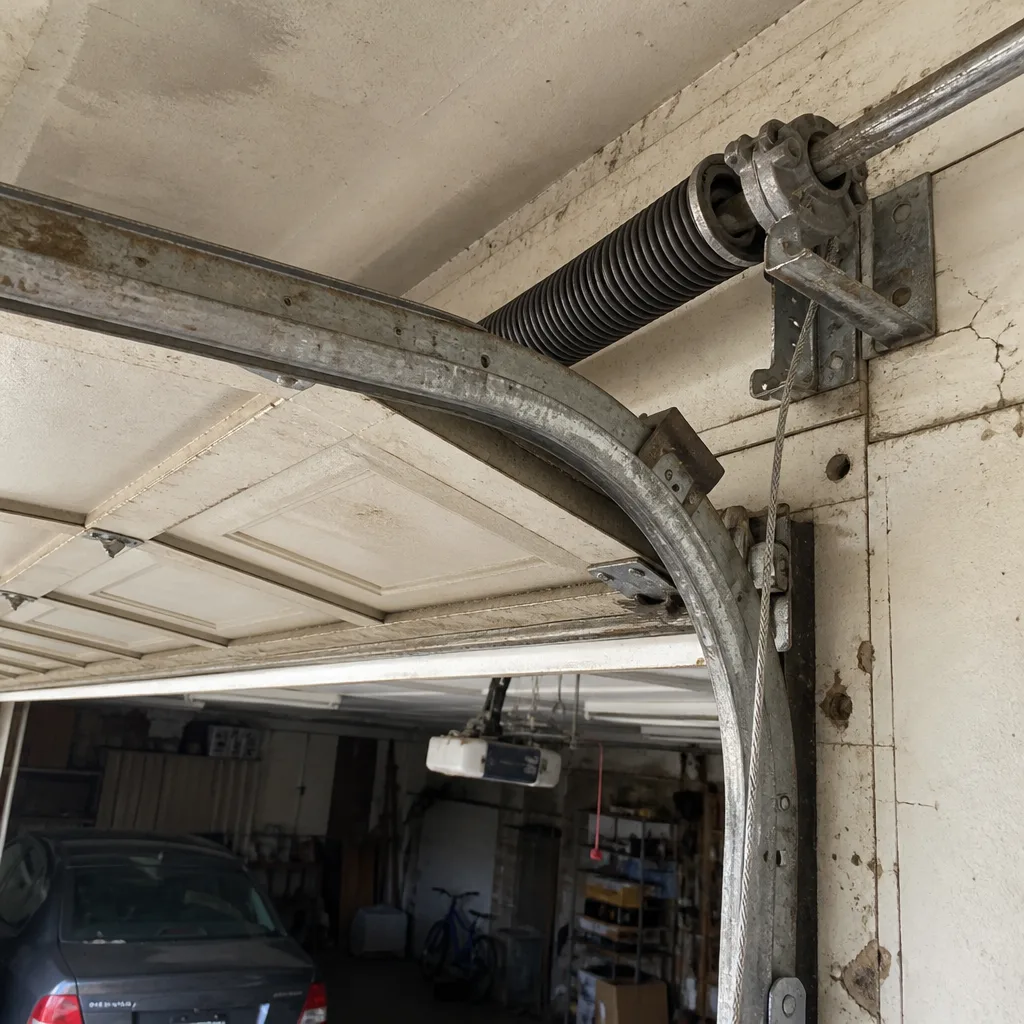 Before
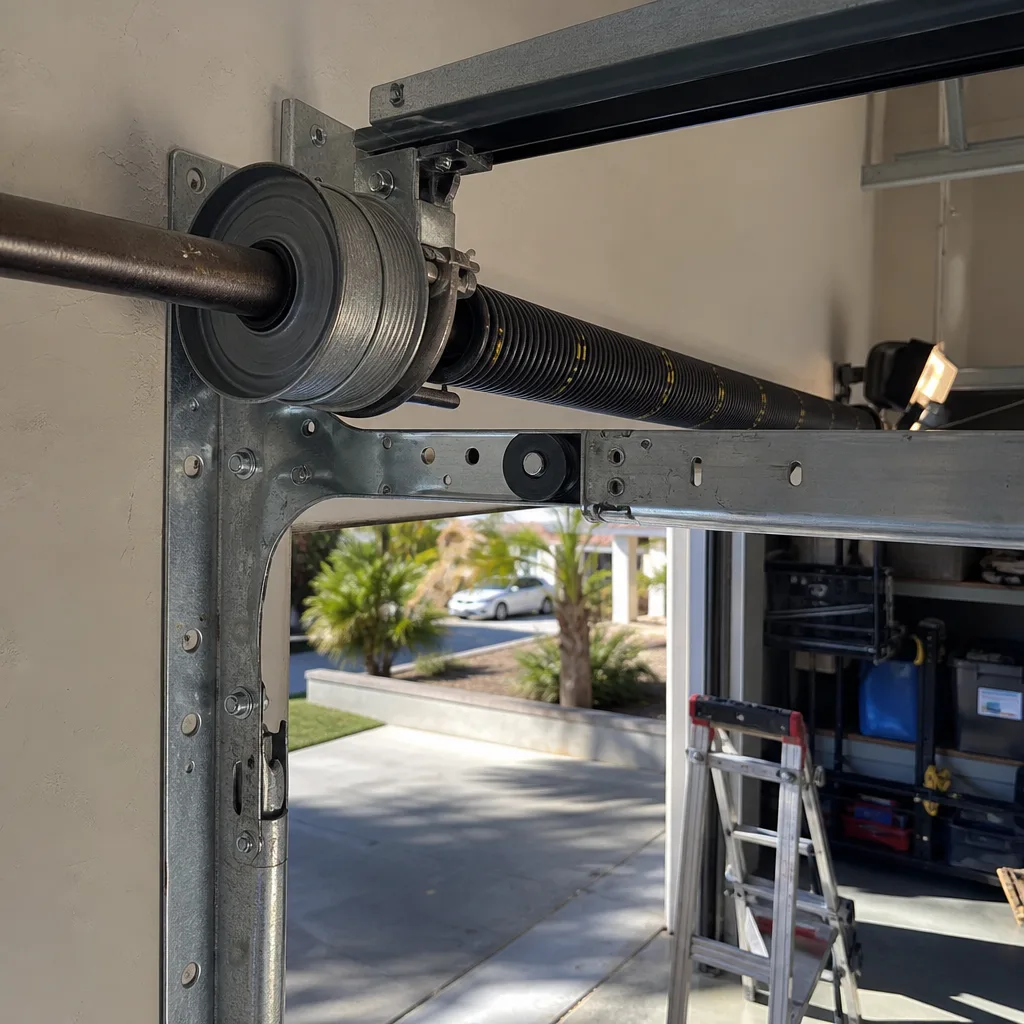 After
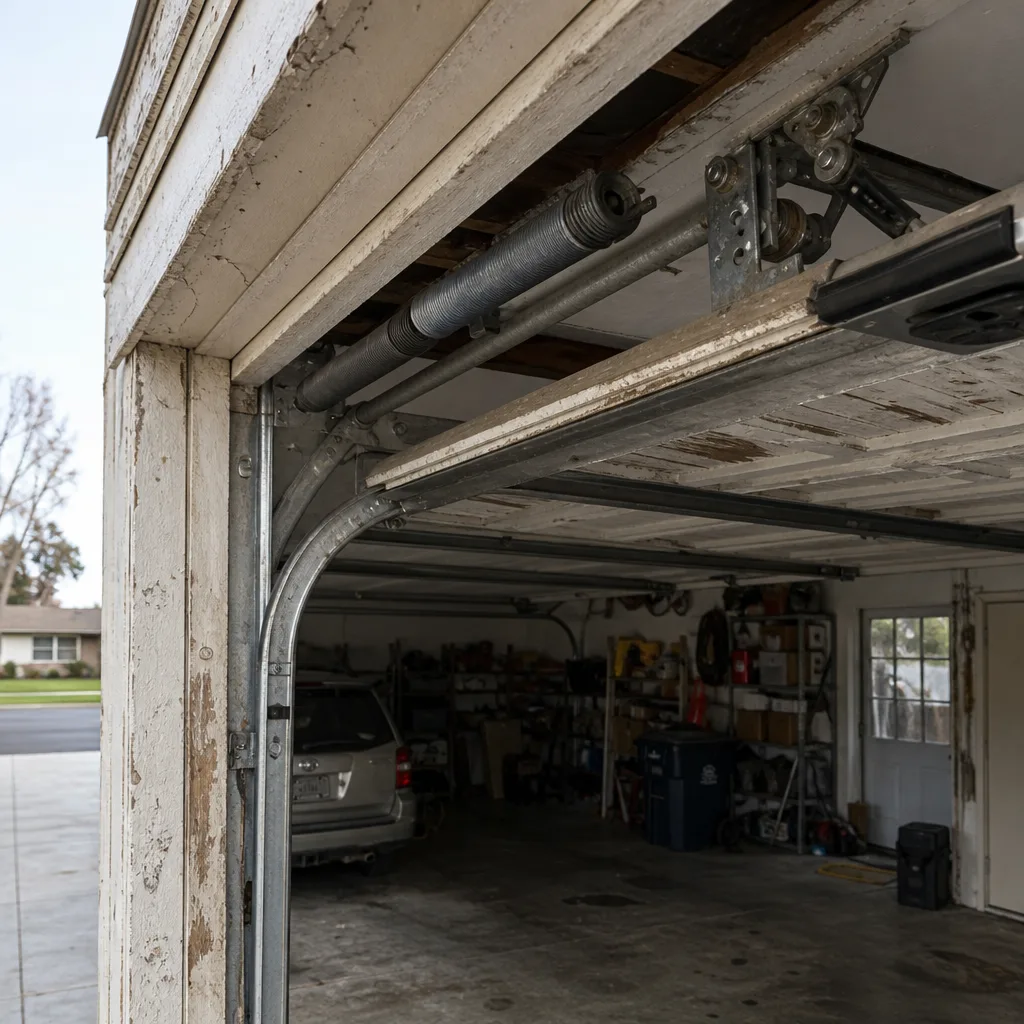 Before
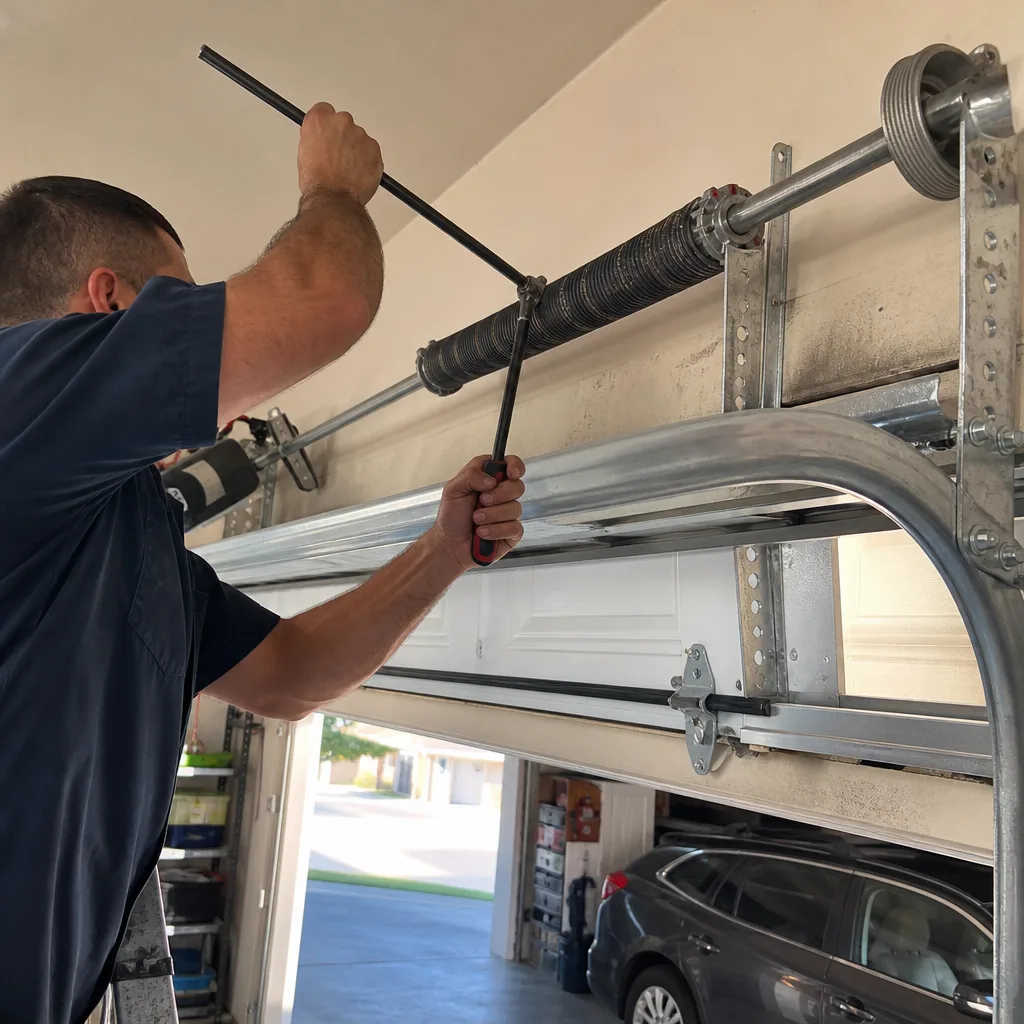 After
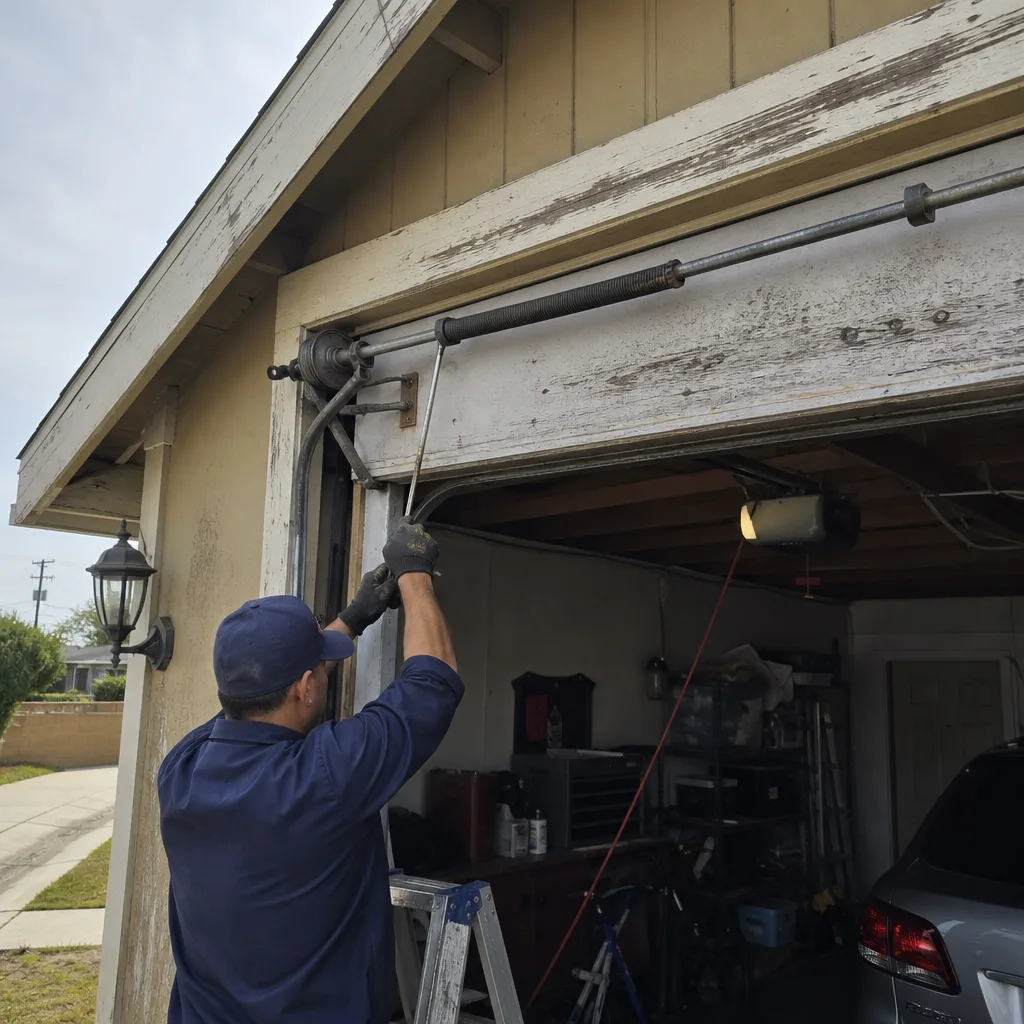 Before
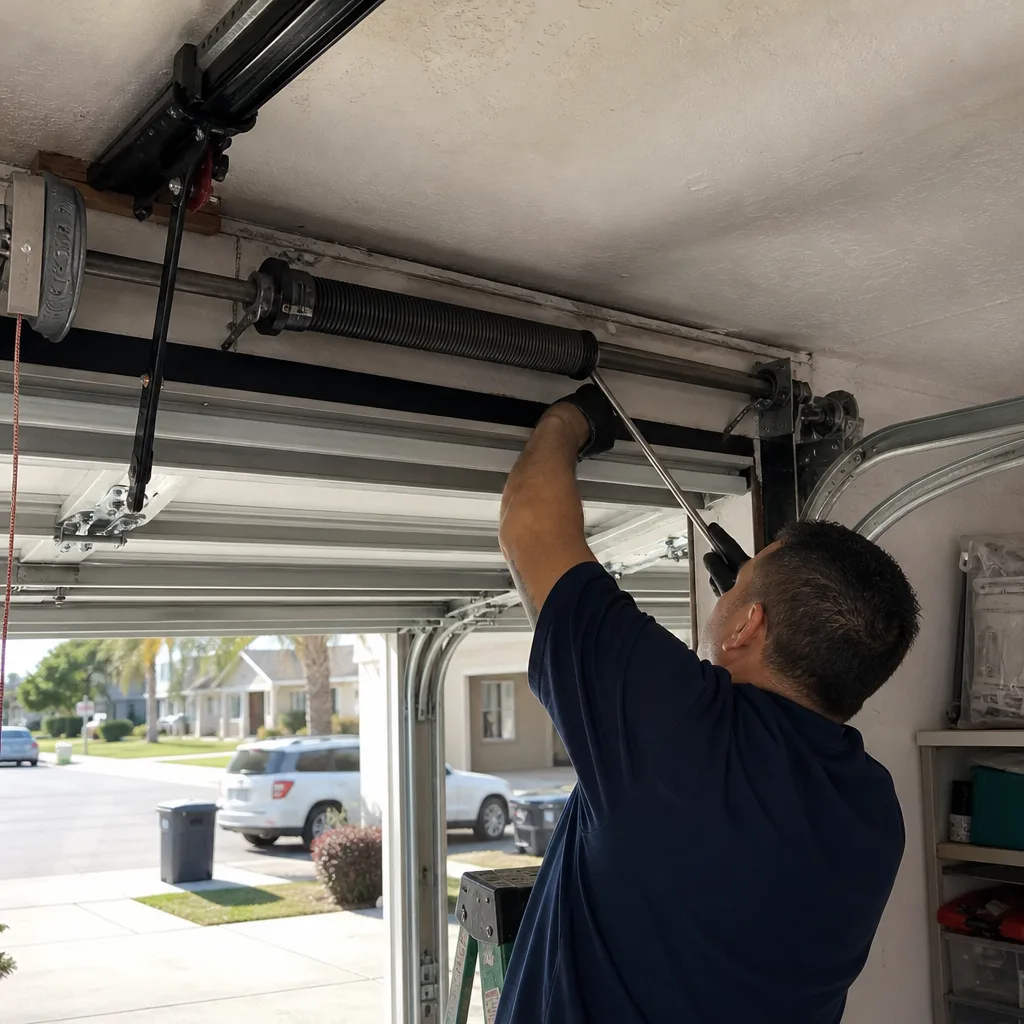 After