
Last updated October 30, 2026
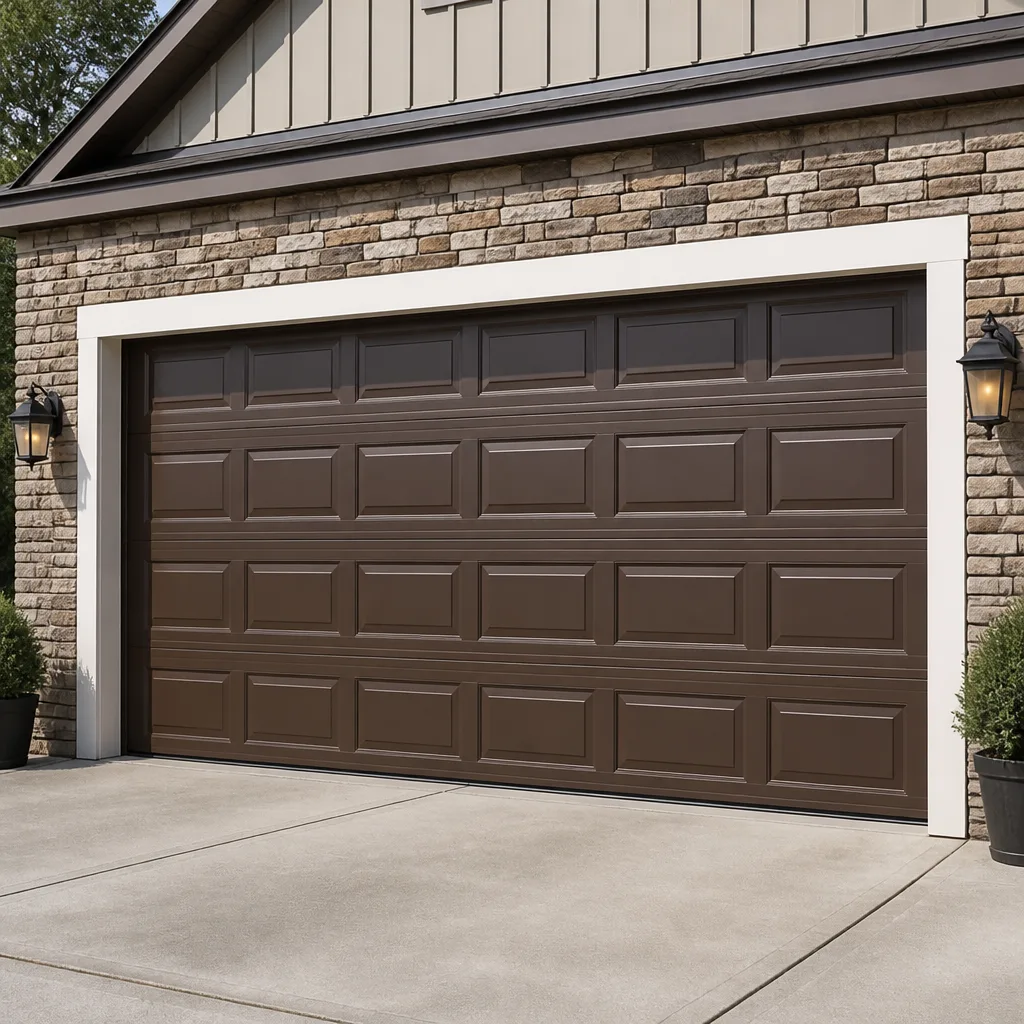 Raised-panel steel
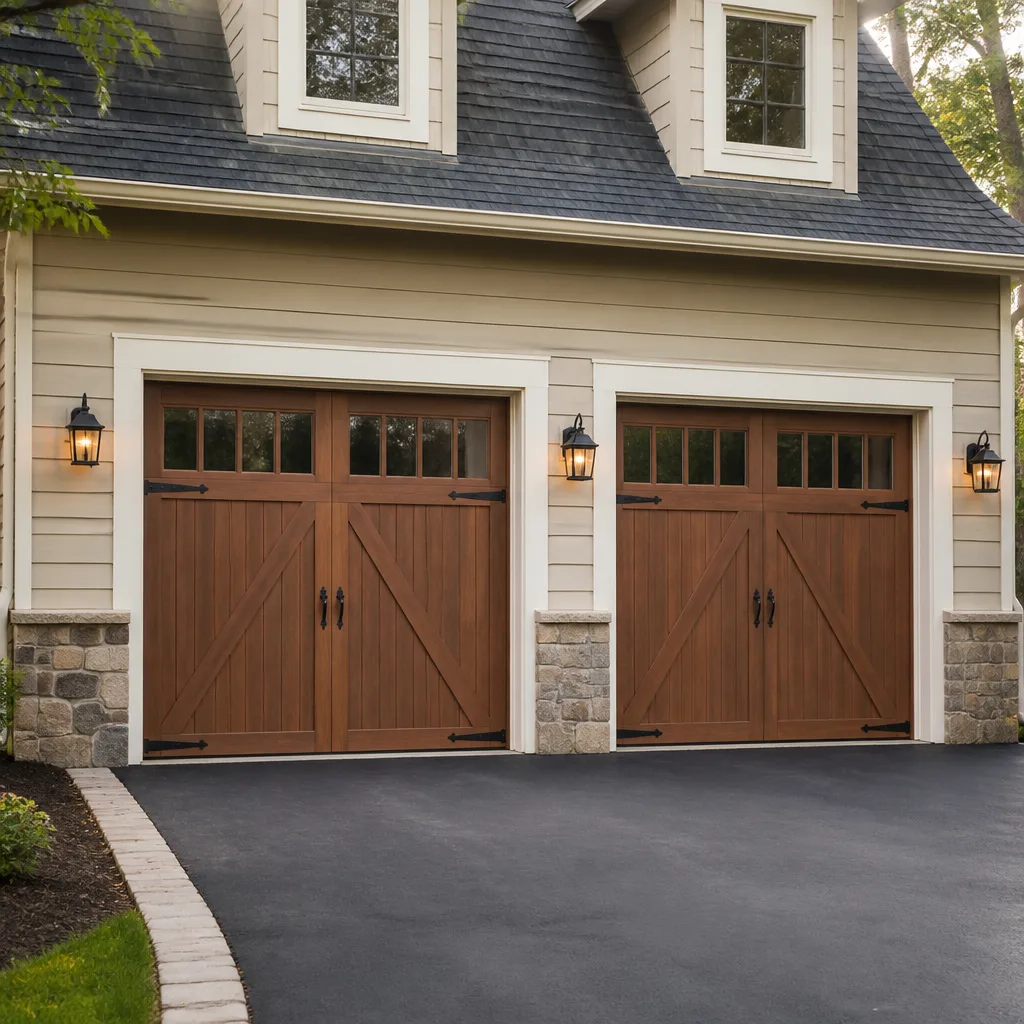 Carriage house
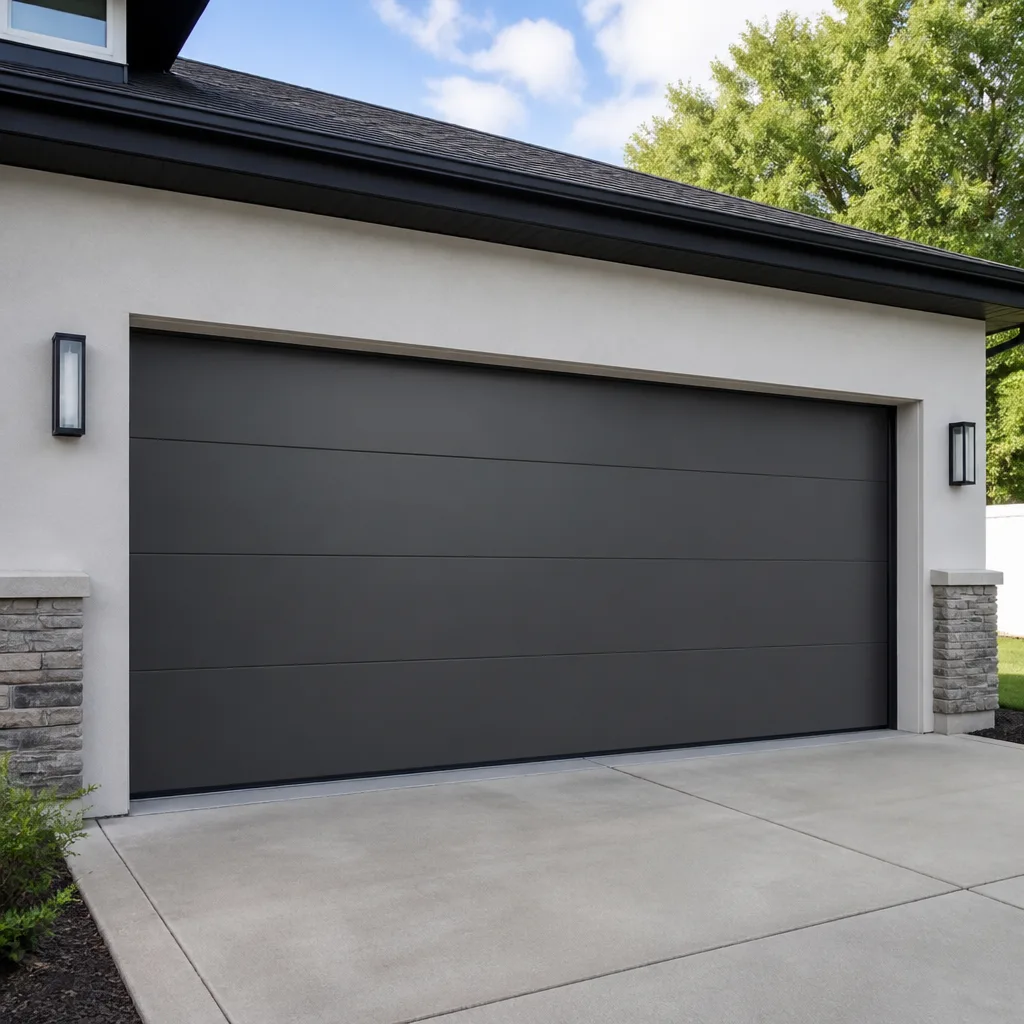 Modern flush
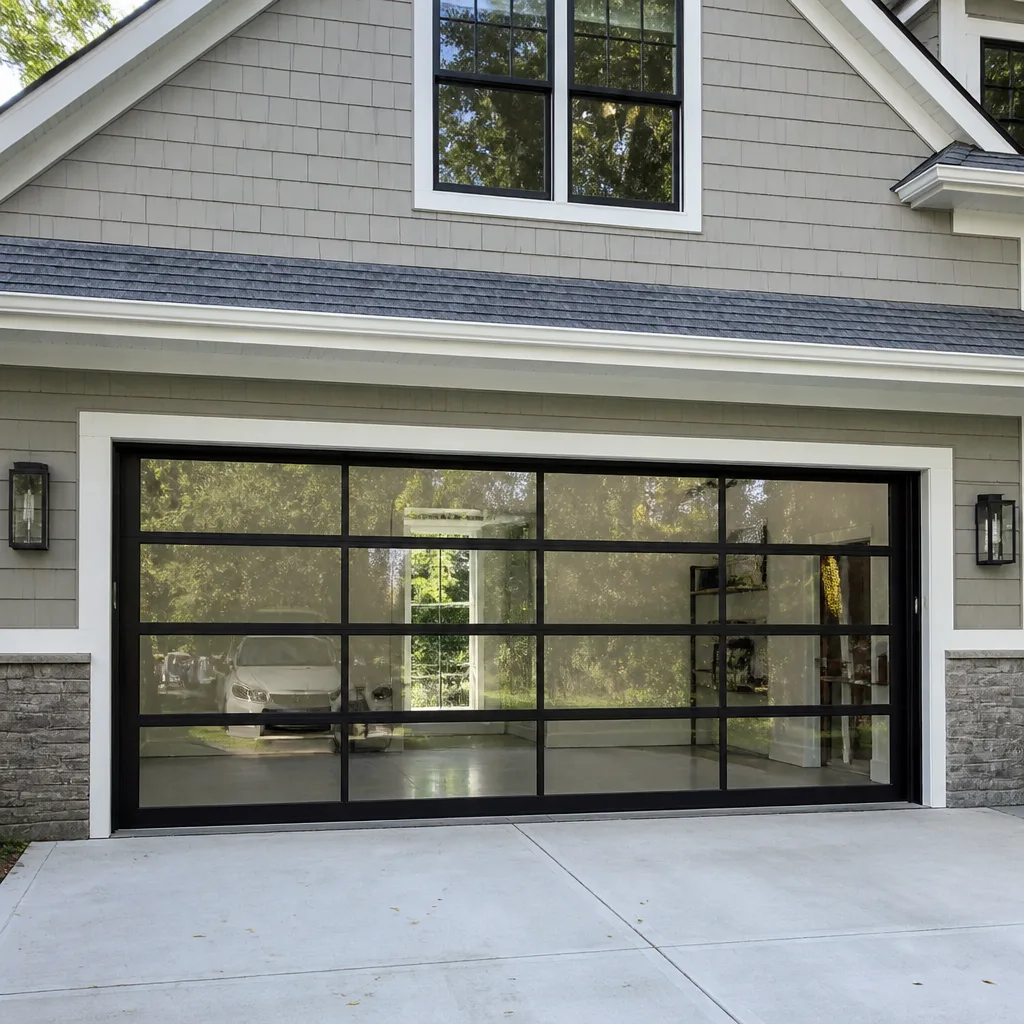 Full-view glass
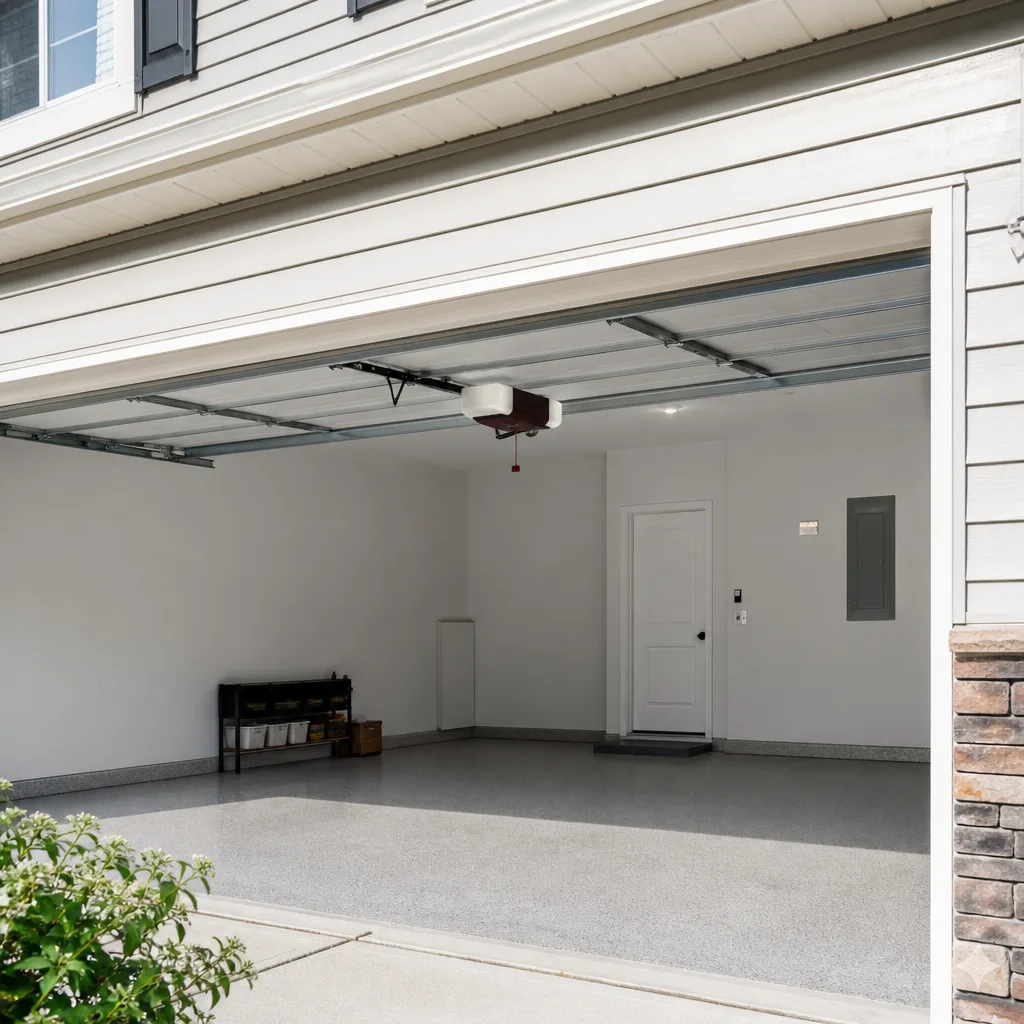 LiftMaster openers
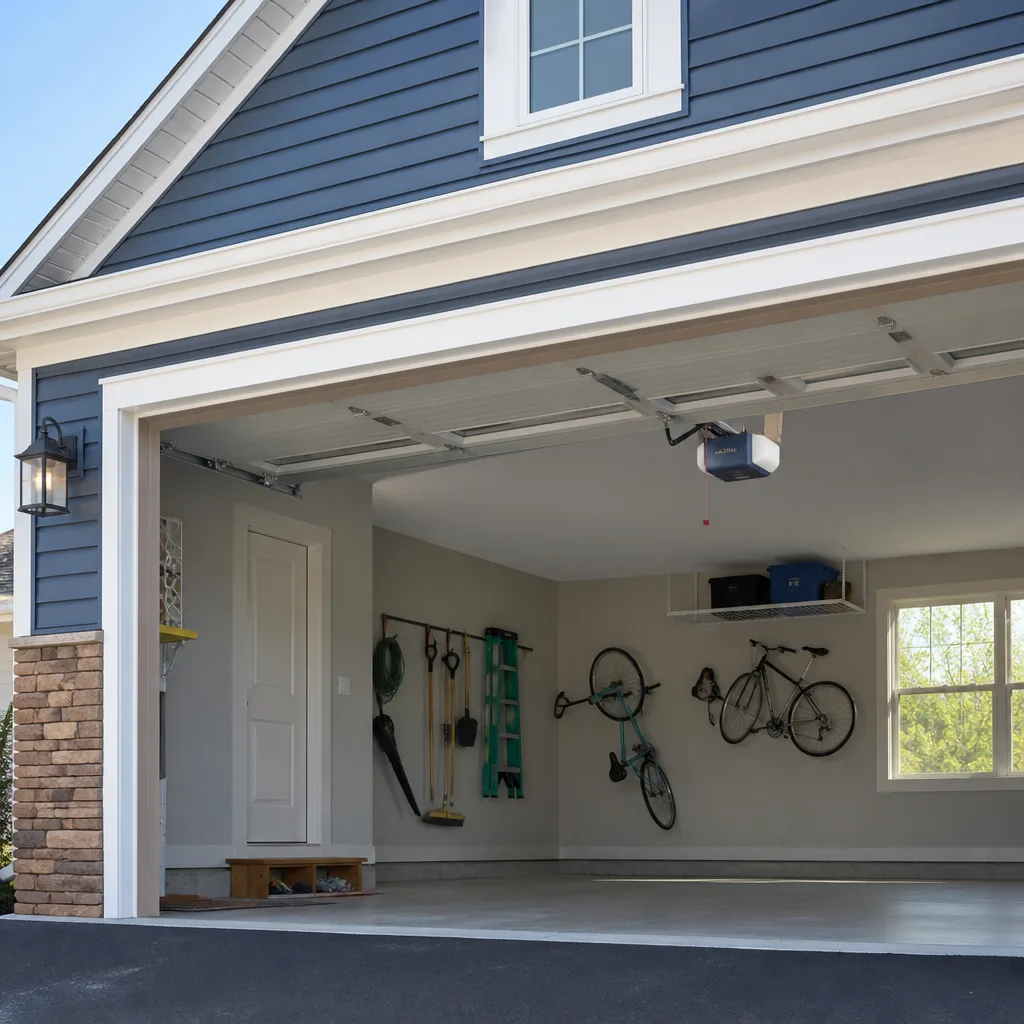 Chamberlain openers
Full 25-point door and opener safety check with every visit - springs, cables, rollers, tracks, and your LiftMaster or Chamberlain opener included
You get a price before we start. It does not change when the truck arrives.
Get your free estimateGarage Door Cost Breakdown: The Riverside Homeowner’s Reference for 2026
The national average for garage door replacement gets cited everywhere as $1,100 to $1,500. In Riverside, with a permit, California-compliant disposal of the old door, and a licensed C-61/D28 contractor, you’re starting closer to $1,400 before you’ve chosen a door. That gap is the number that gets homeowners in trouble. This guide breaks down the real 2026 Riverside-market line items: what a door actually costs, what labor actually costs, what the permit actually costs, and which corners low-ball quotes cut that cost you double later. We’ll go component by component so you can evaluate any quote with real numbers, not national averages that don’t apply here.
Quick Answer
A full garage door replacement in Riverside costs between $1,400 and $4,200 in 2026, with most single-car and standard double-car doors landing between $1,800 and $2,800 installed. The spread comes down to door material, insulation, opener replacement, and whether the installer pulls a permit. A torsion spring replacement alone runs $180 to $340 in Riverside, and a new garage door opener installed runs $450 to $850.
Styles & brands we work with
Table of Contents
- Component-by-Component Cost Breakdown for Riverside
- How Door Material Shifts the Total: Steel, Wood Composite, Aluminum in Riverside’s Climate
- What a Legitimate Riverside Garage Door Quote Includes (and What Low-Ball Quotes Omit)
- Spring Replacement Cost Transparency: Why Gauge and System Design Matter
- Garage Door Opener Costs in Riverside: Motor Types and What You’re Really Paying For
- Financing and Warranty Considerations: Do Extended Plans Pencil Out in Riverside?
- Common Mistakes to Avoid
- Frequently Asked Questions
Component-by-Component Cost Breakdown for Riverside
When a Riverside contractor hands you an itemized quote, these are the six line items you should see. If you don’t see them itemized, ask for the breakdown. A legitimate shop will give it to you without hesitation because their margin isn’t hidden in line-item games, it’s in doing the work correctly.
Here’s what each component costs in the Riverside market as of early 2026:
- Door panel (the actual door): $450 to $1,900 depending on material, insulation, and whether it’s a single or double width. R16-R18 insulated steel makes up the middle of that range. Uninsulated aluminum sits at the low end. Wood composite lands at the top.
- Hardware kit (tracks, rollers, hinges, cables, bottom seal): $180 to $420. This is the part low-ball quotes trim: reusing 15-year-old rollers on a new door saves $80 and costs you a noisy, binding door within a year.
- Torsion spring system: $180 to $340 in Riverside. Includes both springs (or a matched single spring for light doors), bearing plates, center bracket, and the labor to wind and set the tension. We’ll get deeper into why gauge and system design matter below.
- Opener (if replacing): $450 to $850 installed. Chain drive at the low end, belt drive in the middle, wall-mount jackshaft at the top. Reusing an existing opener that’s under 10 years old is usually fine unless it’s a Genie screw drive or an older LiftMaster without safety sensor retrofits.
- Labor: $350 to $700 for a full removal and install. Riverside labor rates run higher than the national average because California workers’ comp and liability insurance costs are baked into every legitimate contractor’s pricing. We’ve seen unlicensed operators quote $150 for a job that takes two trained techs four hours. That math doesn’t work with insurance and payroll. What it does work with is a crew that disappears when the door binds a month later.
- Permit and inspection: $80 to $150 in Riverside. The city requires a permit for garage door replacement, and the inspection is typically a quick visual check. Some contractors roll this into the total. Some charge it as a separate line. Either is fine, but if the quote doesn’t mention a permit at all, you’re talking to someone who doesn’t pull them, which means no inspection and no code compliance sign-off.
- Haul-away and disposal: $60 to $110. California disposal fees apply, and a full double-car steel door weighs 180 to 300 pounds. It’s not something the city picks up at the curb.
Add those up: a standard insulated steel double door with springs, hardware, labor, permit, and haul-away comes to $1,800 to $2,600 before opener replacement. A high-end wood composite with a jackshaft opener and full insulation pushes $3,800 to $4,200. That’s the honest Riverside range for 2026.
How Door Material Shifts the Total: Steel, Wood Composite, Aluminum in Riverside’s Climate
The Riverside climate is a specific animal. Hot, dry summers with daytime temperatures regularly in the high 90s. Mild winters that can still dip into the 30s overnight in neighborhoods like Canyon Crest and Mission Grove. Low humidity for most of the year, which means wood products behave differently here than they do in coastal or humid markets. Your door material choice should account for that, not just for how it looks from the street.
Uninsulated aluminum: $450 to $850 for the panel. Lightweight, dent-prone, and a poor insulator. In Riverside’s summer, an uninsulated west-facing aluminum door turns your garage into an oven by 2 p.m., which then radiates heat into any adjacent room and shortens the life of anything stored in the garage. These doors are fine for detached garages that never see daily use. For an attached garage in central Riverside, they’re a false economy at almost any price point.
Insulated steel (R6 to R18): $700 to $1,400 for the panel. The sweet spot for most Riverside homes is a 25-gauge or 24-gauge steel door with a polystyrene or polyurethane core in the R12 to R18 range. Steel this gauge holds up to Riverside’s UV exposure without fading or warping, and the insulation cuts summer heat transfer meaningfully. This is the material we recommend to about 70% of Riverside homeowners we quote.
Wood composite and solid wood: $1,200 to $2,500 for the panel. Beautiful, especially for mid-century and craftsman homes in the Wood Streets and Victoria neighborhoods. But wood doors in Riverside need re-sealing every two years or the dry heat pulls moisture from the skin and you get cracking around the stiles. If you’re committed to the look, wood composite (engineered wood over a steel or aluminum core) gives you the aesthetic with half the maintenance. Solid wood is a Riverside-specific gamble: it’s heavy, which means you’re also upgrading to a heavier spring system, adding $60 to $120 to the spring line.
Whatever material you choose, sequence the decision this way: 1) attached or detached garage, 2) what direction does the door face, 3) how much will you care about garage heat in July. That sequence answers the insulation question honestly before you start looking at panel profiles and colors.
What a Legitimate Riverside Garage Door Quote Includes (and What Low-Ball Quotes Omit)
A real 2026 Riverside quote is not a one-line number scrawled on a business card. It’s an itemized document. Here’s what a legitimate quote includes and what we see omitted from the low-ball quotes that show up in Riverside homeowners’ inboxes:
A legitimate quote includes:
- Door panel specification: manufacturer, model or series, construction (steel gauge, insulation R-value, or wood species), and dimensions.
- Hardware list: whether tracks, rollers, hinges, and cables are being replaced or reused. “Reuse” language should set off a flag.
- Spring specification: wire gauge, inside diameter, and whether it’s a single-spring or double-spring configuration.
- Opener details: brand, drive type (chain/belt/jackshaft), horsepower, and whether safety sensors and a battery backup are included.
- Permit line item, or a written statement that permitting is included in the labor line with the permit number noted after install.
- Haul-away and disposal note, with any relevant California environmental disposal fee stated.
- Labor warranty and parts warranty with durations, in writing.
- Total price, clearly stated as fixed or not-to-exceed.
What low-ball quotes omit, typically, is some combination of: a permit (that $80 to $150 is real, and skipping it violates Riverside code and voids some manufacturers’ warranty claims), fresh hardware (reusing worn rollers and hinges is the most common corner we cut out of failed installs done by other crews), matched springs (more on this below), and disposal fees (the old door “disappears” into a dumpster that the homeowner gets billed for later or, worse, that lands in a lot off of Van Buren that the homeowner doesn’t want their address attached to).
Do an apples-to-apples comparison by normalizing every quote to this checklist. Two quotes that both say $2,200 can be $600 apart in actual value once you strip away what one included and the other didn’t.
Spring Replacement Cost Transparency: Why Gauge and System Design Matter
If there’s one line item on a garage door quote that gets fudged more than any other in Riverside, it’s springs. The lower-cost quote almost always includes a lower-quality spring, and by lower-quality we mean a smaller wire gauge matched to a lower cycle life. The price difference is real, but the cycle difference is what you live with.
Cycle life is the number of open-close cycles a spring is rated for before it fails. A cheap 0.207-inch gauge spring on a 7-foot door might be rated for 5,000 cycles. At four cycles a day, that’s about three and a half years. A 0.225-gauge or 0.234-gauge spring rated for 10,000 to 15,000 cycles gives you seven to ten years. The material cost difference between those springs is under $40. The labor to install either one is identical, generally in the $180 to $340 range quoted above for a full spring replacement on a standard residential door in Riverside.
The second transparency question: single-spring versus double-spring systems. All these decisions are ones our team works through on a garage door repair in Riverside call. A single spring system (one spring mounted on the torsion bar) is common on single-car doors and saves $40 to $70 on parts, but when it fails, the door is out of commission until someone comes out. A double-spring system costs more up front and fails less catastrophically: when one spring breaks, the other often still supports the door well enough to open it manually. For a homeowner who uses the garage daily, the double-spring configuration is worth the difference.
Third: safety. Torsion springs hold a lot of energy. Winding one requires a real-feel, specific tool set, and the wrong move can break a wrist or worse. We strongly recommend having springs replaced by a trained professional rather than attempting it yourself. If a technician quotes you a spring replacement, ask what wire gauge and cycle rating they’re using. If they can’t answer instantly, that tells you what you need to know.
Garage Door Opener Costs in Riverside: Motor Types and What You’re Really Paying For
A new opener installed in Riverside runs $450 to $850 in 2026, depending on drive type and features. Here’s the honest breakdown of what that range buys you:
- Chain drive, 1/2 HP: $450 to $550 installed. Loud, reliable, and fine for detached garages or homeowners who genuinely don’t care about vibration. We install fewer of these in Riverside than we did ten years ago, mainly because attached garages with bedrooms above them make chain noise a real complaint.
- Belt drive, 3/4 HP: $550 to $700 installed. Quieter, smoother, and the default recommendation for attached garages in Riverside. Chamberlain and LiftMaster both make solid belt-drive units in this range. The steel-reinforced belt is quieter than chain and holds up fine in Riverside’s heat because the motor doesn’t work against the belt the way it fights a chain.
- Wall-mount jackshaft, 3/4 HP to 1 HP: $700 to $850 installed. Mounted beside the door instead of overhead. Frees up ceiling space, nearly silent, and the right choice for high-lift or unusual track setups. Raynor and LiftMaster dominate this category, and if you’re converting a carport to a garage in a Riverside ADU project, this is often the correct opener type.
- Battery backup add-on: $60 to $100. In Riverside, power outages are less frequent than in fire-prone areas further out, but if you park in the garage and leave during a hot day, a dead opener with no manual release familiarity is a real frustration. California building code requires battery backup on new opener installs in many new construction scenarios.
If your opener is acting up, a garage door opener repair in Riverside call often resolves it for $120 to $250, which is frequently a better deal than replacing a unit that’s under 10 years old. Common failures we see: gear and sprocket wear on older LiftMaster chain drives, logic-board failure from heat cycles (yes, Riverside’s summer heat is hard on opener electronics mounted to a hot ceiling), and safety sensor misalignment that homeowners sometimes misdiagnose as a dead motor.
We work on the brand you already have, whether that’s a Chamberlain, a Craftsman, a Raynor, or a Genie that came with the house. That matters because we know the failure patterns of each. You’re not paying for us to learn your opener’s quirks on your clock.
Financing and Warranty Considerations: Do Extended Plans Pencil Out in Riverside?
Riverside homeowners use their garage doors more than the national average. Think about it: the Inland Empire runs on driving. Two working adults, kids with school schedules, weekend trips up to Big Bear or down to Orange County. A garage door in Riverside might see 5 to 7 open-close cycles a day, every day. At 6 cycles a day, that’s about 2,200 cycles a year. Compare that to a homeowner in a dense coastal city who parks on the street and uses their garage for storage: they might cycle their door 800 times a year.
That usage rate should drive how you evaluate warranties and extended service plans. A basic 1-year parts warranty on a door that cycles 2,200 times a year is a thin safety net. Most manufacturers offer 3-year, 5-year, and limited-lifetime warranties on hardware, but the extended service plans sold by some big-box installers are a different animal:
- What extended plans cover: typically scheduled maintenance visits, spring inspections, and a discount on parts if something fails outside warranty. Some include one free spring replacement within the plan term. Read the fine print on whether the plan covers labor or just parts; most cover parts only, which is the least expensive part of any repair.
- What they cost: typically $120 to $250 per year in the Riverside market. Over a 5-year door lifespan, that’s $600 to $1,250 in “insurance” for a door that might only need one $300 repair in that window.
- When they pencil out: if your household cycles the door 6+ times daily AND you have a double-spring system where the failure of one spring doesn’t shut down the door completely, an extended plan is marginal. If you have a single-spring system and no backup door access, the plan might be worth it simply because the failure point shuts you down.
- When they don’t: if you have a newer door under a 5-year parts warranty, the extended plan overlaps coverage you already have. You’d be paying for coverage on parts that are already covered.
Financing for garage door replacement in Riverside is available through third-party lenders and most HVAC-style home services financing companies, with terms typically 12 to 60 months. If you’re financing, the interest rate you qualify for will depend on your credit, not on the garage door company. Keep that in mind when a company advertises “0% financing”: that cost is often built into the door price. The honest framing: a $2,200 door at 0% for 24 months might have been a $1,900 door with cash. You’re paying the finance charge either way; it’s just whether you see it on the quote or not.
Common Mistakes to Avoid
- Accepting a one-line quote. A quote that says “garage door replaced: $X” tells you nothing. Demand the itemized list. If the contractor won’t itemize, their margin is hidden somewhere, and it’s usually in the springs or the hardware you should have received.
- Skipping the permit in Riverside. Our city requires a permit for garage door replacement. Unpermitted work shows up at resale, can strand a sale in escrow, and voids the city’s inspection guarantee that the work meets code. The $80 to $150 fee is the cheapest insurance you’ll ever buy on a $2,000 project.
- Reusing old rollers on a new door. This saves about $80 and shortens the life of the new door’s tracks by years. Worn nylon rollers transfer friction into the track, and the track is not a wear item. Replace the rollers every time, no exceptions.
- Choosing a door by price alone. A $450 uninsulated aluminum door on an attached west-facing garage in Riverside is a purchase you’ll regret every July day at 4 p.m. The garage will be 10-15 degrees hotter than it would be behind an insulated door, and that heat doesn’t stay in the garage.
- Not confirming the spring spec before signing. Ask: what gauge, what cycle rating, single or double? If the answer is vague, walk. Springs are the component that fails most often, and a cheap spring installed at “the going rate” is pure profit for the installer and pure frustration for you in three years.
- Using a contractor who isn’t garage-door-specific. General contractors and handymen do garage doors occasionally. The C-61/D28 license classification exists for a reason. Garage doors have tension-loaded parts, specific code requirements, and manufacturer-specific installation specs. This is not a side trade.
- Ignoring door opener noise when it first appears. A grinding or squealing opener motor in Riverside heat is often the gear and sprocket failing, which is a $150 repair if caught early and a $600 replacement if ignored. Early noise is a warning that’s cheap to answer.
See the difference
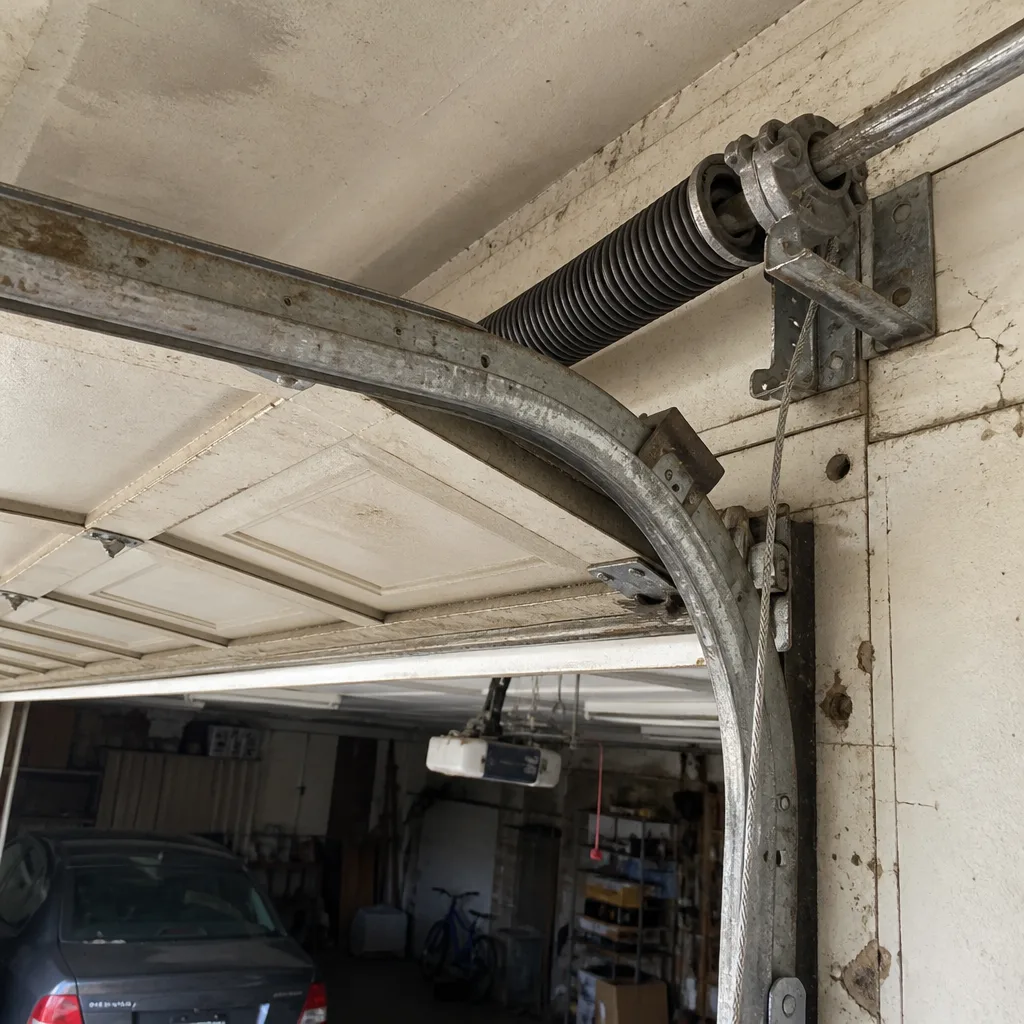 Before
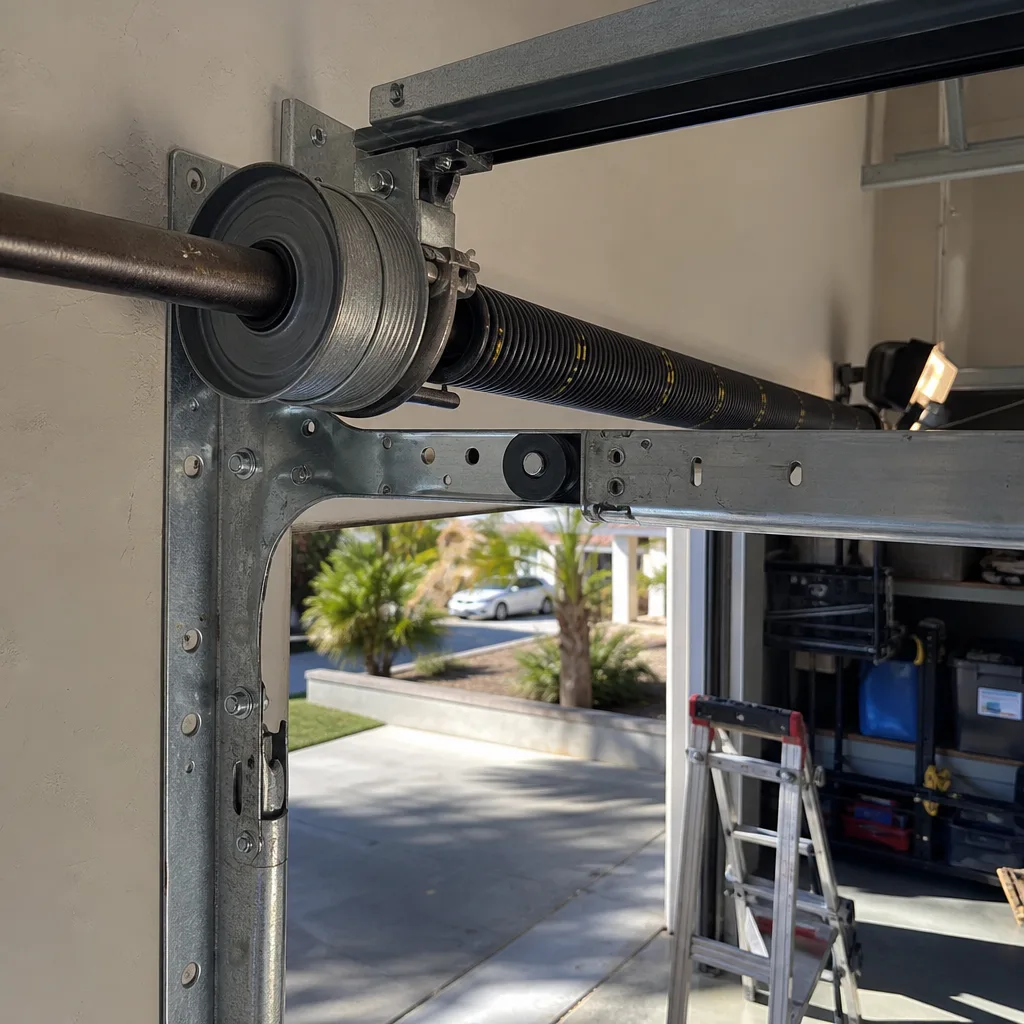 After
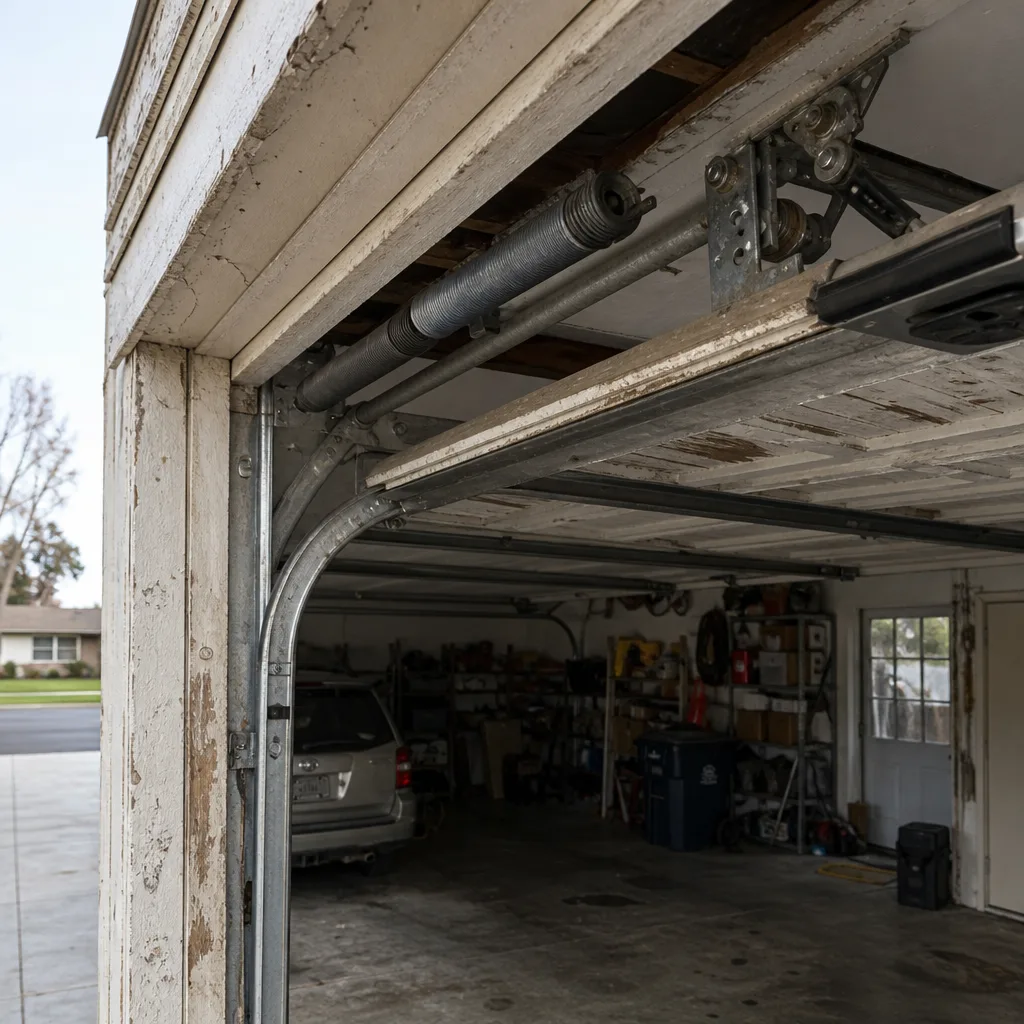 Before
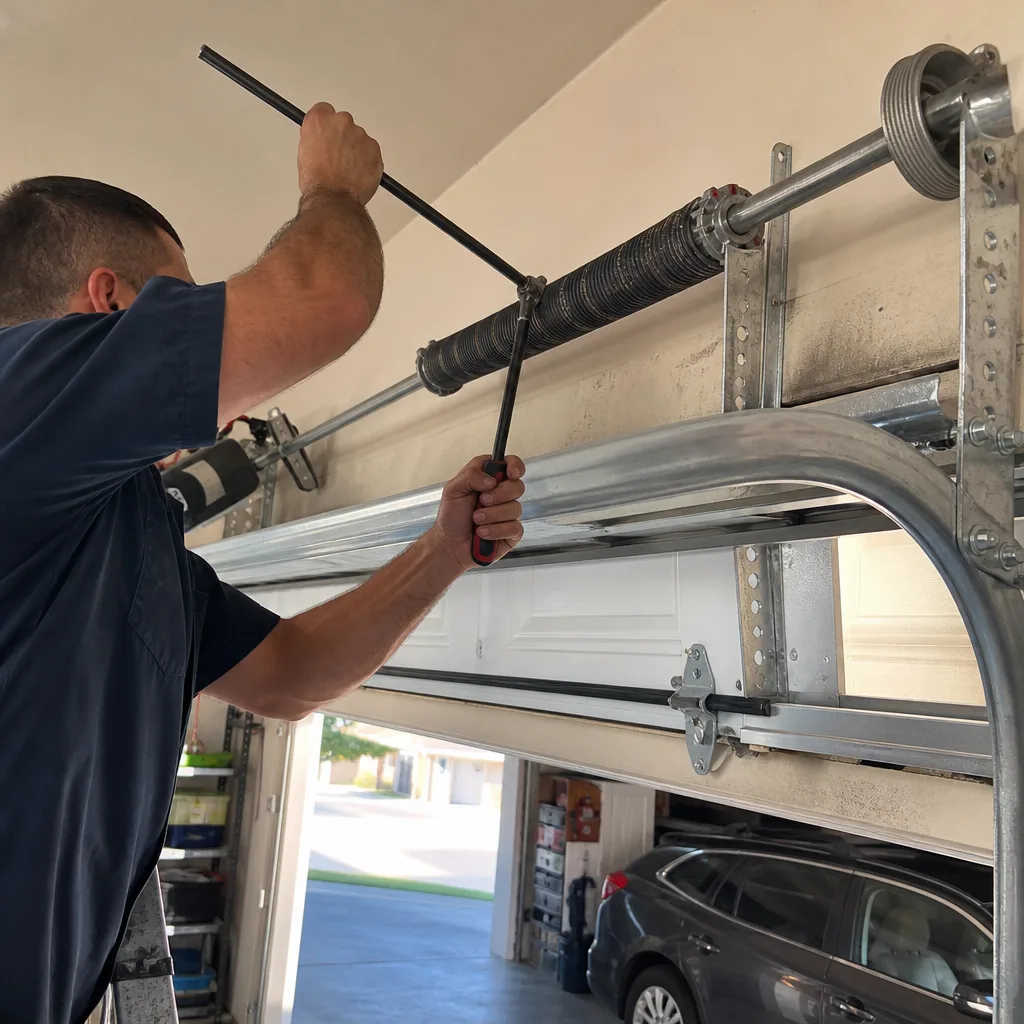 After
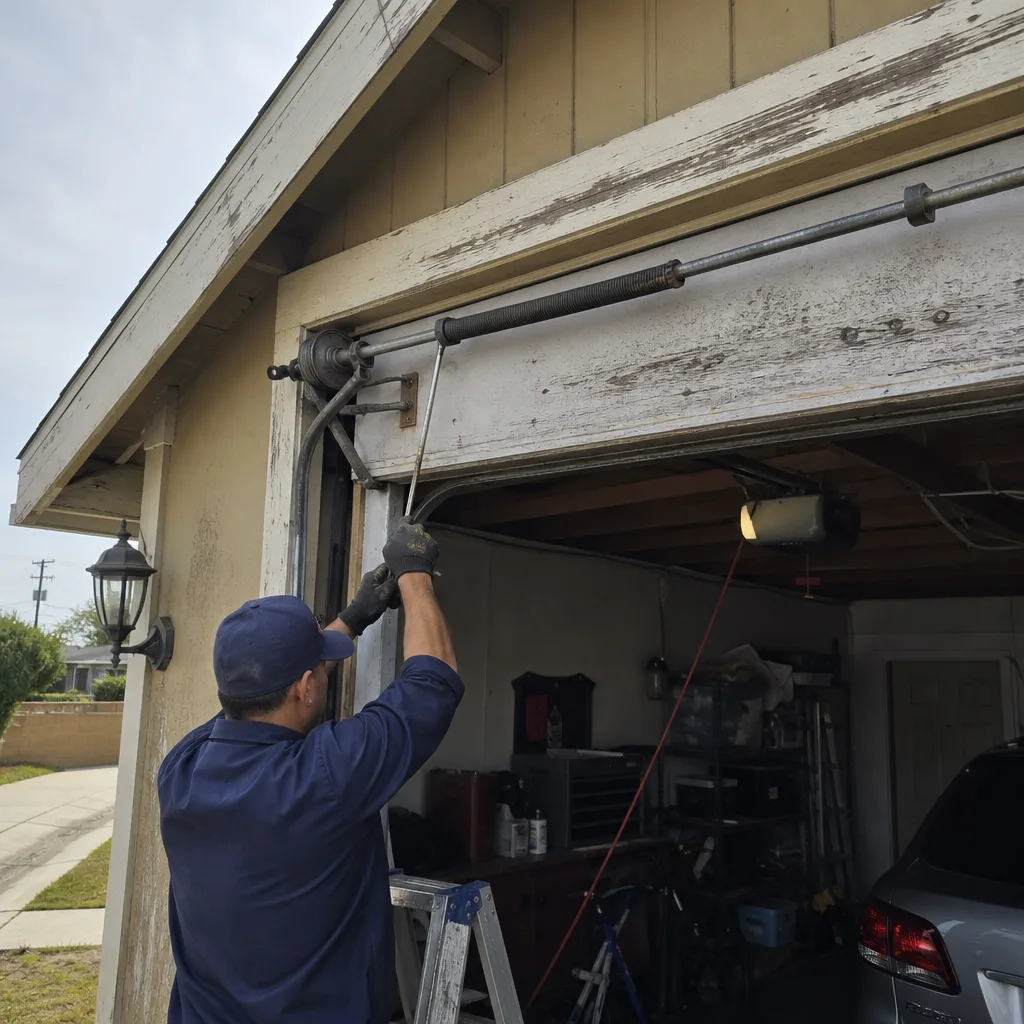 Before
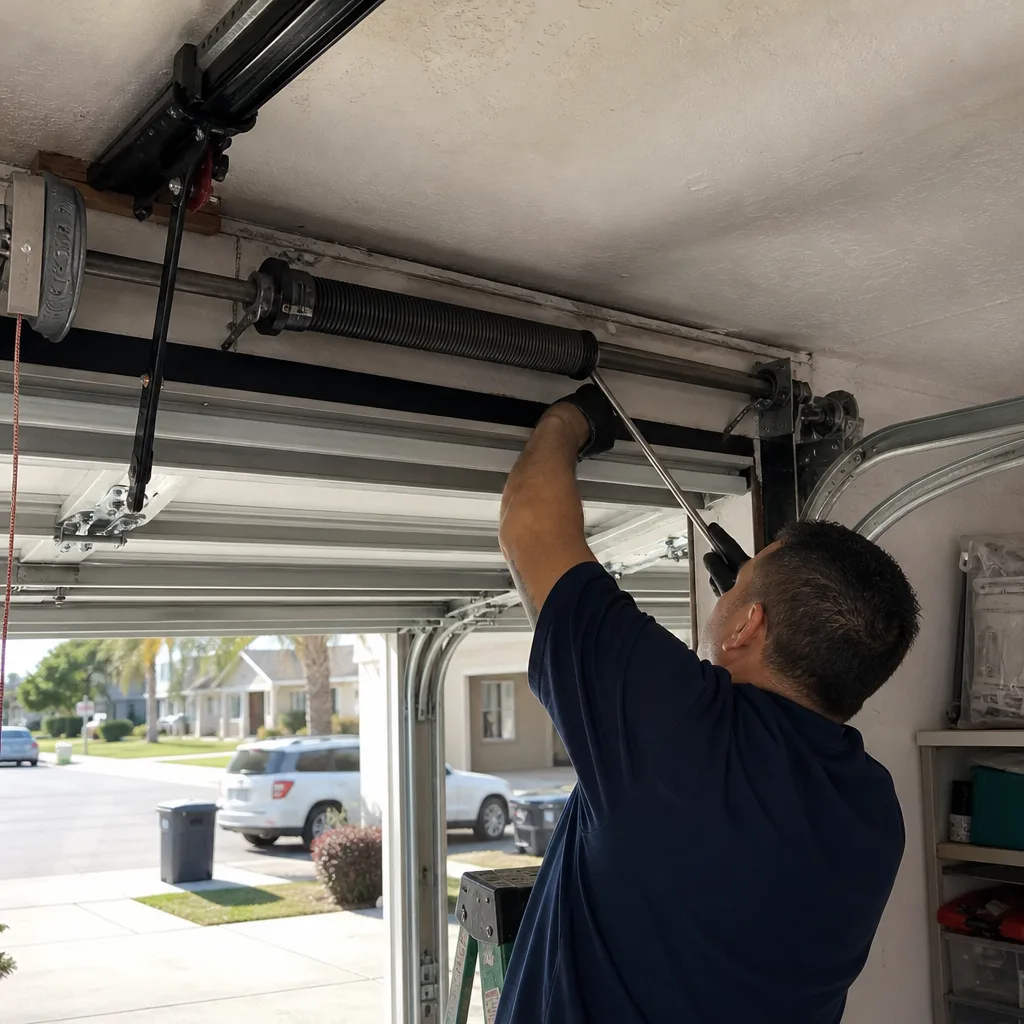 After
When to Call a Professional
Call a garage door professional when: a torsion spring breaks (never attempt this repair yourself, the stored tension can cause serious injury), when the door comes off its tracks, when the opener motor runs but the door doesn’t move, or when you’re replacing a door and the old one used a custom track setup like high-lift or vertical-lift. Any garage door with a broken cable is also a professional call, because the remaining components are under uneven load. If the problem is a misaligned safety sensor, a grinding opener gear, or a door that’s binding in one spot along the track, those are also jobs for a trained tech with the right torque specifications and replacement parts on hand. Blue Ribbon Garage Door Repair offers free estimates in Riverside, call (877) 283-1083.
Frequently Asked Questions
A full garage door replacement in Riverside costs $1,400 to $4,200 in 2026, with most standard projects landing between $1,800 and $2,800. The national average cited online is $1,100 to $1,500, but that number doesn’t include Riverside permit fees, California disposal costs, or local labor rates. Call (877) 283-1083 for an exact quote on your door size and material.
A garage door replacement permit in Riverside costs $80 to $150, depending on the valuation of the work. Some contractors bundle this into their total price, others list it as a separate line. Either is fine, but a quote that doesn’t mention a permit at all is a quote from someone who doesn’t pull them, which violates Riverside code.
Yes, and spring replacement alone costs $180 to $340 in Riverside. If your door is otherwise in good condition and under 15 years old, replacing the springs and hardware is often the right call. A full garage door repair in Riverside might include springs, rollers, hinges, and cable replacement for $300 to $550, which is far less than a new door.
A properly maintained insulated steel door lasts 15 to 20 years in Riverside. The dry heat is gentler on steel than coastal humidity would be, but UV exposure fades paint faster, so homeowners who re-coat their doors every five years get the longest life. Springs, however, are a wear item regardless of climate: expect 7 to 10 years from a good 10,000-cycle spring at Riverside usage rates.
Not necessarily. If your opener is under 10 years old and works fine, you can often reuse it with the new door. If it’s older than 10 years, a belt-drive replacement in the $550 to $700 range makes sense because newer openers with battery backup and updated safety sensors are meaningfully different than a 2005-era chain drive. A garage door opener repair in Riverside call can also diagnose whether your issue is the opener or the door, which saves you from replacing the wrong component.
No, a dented panel on a functioning door does not require full replacement unless the dent compromises the door’s balance or seals. Individual panel replacement is possible on many models, and if the door is structurally sound, a garage door installation in Riverside service can assess whether a single-panel swap makes more sense than pulling the whole system.
The Bottom Line
Riverside garage door pricing is not the national average you’ll find on general home improvement sites. It’s higher, and the reasons are specific: California labor and insurance costs, Inland Empire material logistics, city permit requirements, and environmental disposal fees. Plan for $1,800 to $2,800 for a standard insulated steel double door installed by a licensed contractor in 2026. Demand an itemized quote. Insist on a permit. Ask about spring gauge and cycle rating. Replace hardware with the door, not later. And if your garage sees heavy daily use, invest in the double-spring system and a belt-drive opener. The difference between a $1,400 door and a $2,200 door is often just a few years and a few phone calls. We see it in Riverside all the time. The Blue Ribbon Garage Door Repair home page has more on how we approach these decisions.
Written by the team at Blue Ribbon Garage Door Repair, serving Riverside since 2013.